Loud Enough to Shake Worlds: The Art of Saying Everything Without Speaking
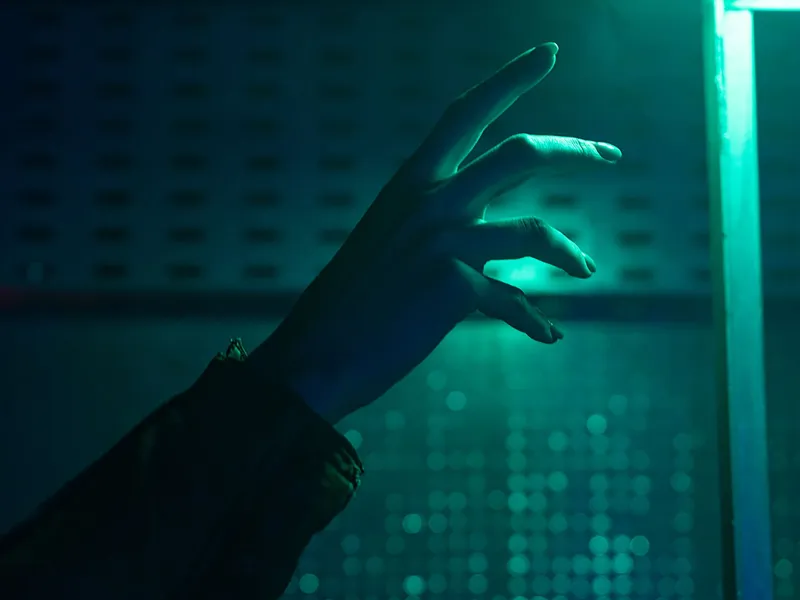
There's a moment in great worldbuilding where you stop reading about a culture and start feeling it. Not because of a long expository speech or a handy glossary in the back of the book, but because a character tilts their wrist at a particular angle and three other characters in the room go completely still. You don't need a translation. You just know something important happened.
That's the magic of non-verbal communication systems in speculative fiction, and the best worldbuilders treat them like a secret weapon. When a society's gestures, colors, silences, or biological signals carry as much weight as any spoken sentence, the world suddenly feels like it existed long before the story started — and will keep existing long after it ends.
More Than a Cool Detail
It's tempting to think of invented gesture languages or bioluminescent signaling as window dressing — a fun quirk to make an alien species feel exotic. But writers who really dig into these systems are doing something far more deliberate. Every non-verbal convention a culture develops is a reflection of what that culture values, fears, or needs to protect.
Consider the Na'vi in James Cameron's Avatar. The phrase "I see you" — Oel ngati kameie — is verbal, sure, but the entire philosophy behind it is embodied. To truly see someone in Na'vi culture is a physical, spiritual act of presence. Their connection to Eywa, expressed through the neural bond of their queues, means that the most profound communication they're capable of isn't spoken at all. It's felt. The whole society is structured around a kind of communion that words are almost too clumsy to carry.
That's not an accident. Cameron and his team were building a culture where the body is the language. And once you understand that, every scene where a Na'vi reaches out physically carries a weight that no amount of dialogue could manufacture.
Gesture as Diplomacy
Some fictional universes take non-verbal systems and turn them into high-stakes political infrastructure. In Ursula K. Le Guin's The Left Hand of Darkness, so much of Gethenian social interaction is governed by shifgrethor — a concept of honor and social presence that operates almost entirely through implication, restraint, and the careful choreography of what is not said or done. To be too direct, too expressive, too eager is a form of social violence. The silence between statements is where the real negotiation happens.
This is a masterclass in using non-verbal logic to reveal a civilization's psychology. The Gethenians aren't cold or emotionally stunted — they're operating in a system where restraint is sophistication. Understanding shifgrethor doesn't just help you decode their behavior; it forces you to question your own culture's assumptions about what openness and honesty even mean.
Fan communities around Le Guin's work have spent decades unpacking shifgrethor, and it's easy to see why. It's the kind of invented social code that makes you look at a real-world diplomatic meeting and wonder what unspoken grammar is running underneath the handshakes.
When the Body Lights Up
Bioluminescent communication is one of sci-fi's most visually stunning tools, and when it's done well, it's also one of the most emotionally efficient. The Heptapods in Ted Chiang's Story of Your Life (and Denis Villeneuve's Arrival) communicate through a written form that has no linear timeline — their entire language reflects a non-sequential experience of reality. But what's fascinating is how the process of communication, the physical act of producing those circular logograms, is itself a kind of embodied philosophy. To write in Heptapod B is to think in Heptapod B, and to think in Heptapod B is to experience time the way they do.
The Axiom from Mass Effect lore and the Quarians' suit-tap communication gestures are beloved by fans precisely because they emerged from necessity — a species that can't remove their environmental suits developed a whole vocabulary of knocks, taps, and pressure signals against the suit's surface. It's practical, it's poignant, and it tells you everything about a people defined by exile and survival.
What these examples share is an understanding that bioluminescence, tapping, or any physical signal system isn't just a neat sci-fi concept. It's a record of why a species evolved or adapted the way they did.
Telepathic Etiquette and the Rules Nobody Talks About
Telepathy in fiction often gets treated as a superpower — a shortcut to knowing everything about everyone. But the most thoughtful worldbuilders understand that widespread telepathy would generate an incredibly complex social etiquette, not eliminate the need for one.
In the Babylon 5 universe, telepaths (Psi Corps members) operate under strict codes about when and how they can use their abilities around non-telepaths. There are formal signals — a raised hand, a specific posture — that communicate "I am scanning" or "I am shielding." The etiquette exists because the alternative is social chaos. What's brilliant is that these rules reveal a society deeply anxious about privacy, consent, and power — anxieties that feel very American, very contemporary, even in a 23rd-century space-station setting.
The Wheel of Time series handles Aes Sedai communication in a similarly layered way. The Aes Sedai are bound by oaths that prevent them from lying outright, so their entire communication style — verbal and non-verbal — becomes an elaborate system of implication, gesture, and strategic omission. A twitch of a shawl, the precise way a sister folds her hands, the direction of a gaze during a Hall gathering — all of it is language. Fans of the series have written extensive guides to decoding Aes Sedai body language, and those guides read like genuine anthropological field notes.
What This Means for Fan Communities and Conlangers
The constructed language (conlang) community in the US is enormous and deeply passionate, and non-verbal systems are increasingly part of the conversation. While groups like the Language Creation Society tend to focus on phonology and grammar, there's growing interest in what you might call "congesture" — the deliberate construction of gesture-based or signal-based communication systems inspired by fictional universes.
Communities on Reddit, Discord servers dedicated to specific fandoms, and convention panels at events like WorldCon regularly feature fans who've taken the gesture vocabularies of their favorite fictional cultures and expanded them. Some have even created functional signing systems based loosely on the implied grammar of fictional non-verbal codes.
This isn't just nerdy fun (though it absolutely is that, and we're here for it). It reflects something real about why these fictional communication systems resonate so deeply. They remind us that language is not just words. It's posture, timing, color, touch, and silence. It's the whole body, the whole history of a people, compressed into a gesture that lasts half a second.
The Silence That Builds Worlds
The next time a fictional character says nothing and everything shifts — pay attention to what the author built to make that moment land. Somewhere behind that scene is a worldbuilder who decided what this culture fears, what it protects, what it has survived, and what it considers too important to trust to words.
That's the real language of silence. And in the best sci-fi and fantasy universes, it's the loudest thing in the room.