The Cup, the Cloak, the Compass: How Fictional Worlds Pour Meaning Into Ordinary Things
Think about the objects that live in your memory from your favorite fictional universes.
Maybe it's the One Ring — not as a weapon of mass destruction, but as a piece of jewelry, warm to the touch, slightly too heavy in the pocket. Maybe it's Hermione's beaded bag, which is so much bigger on the inside that it becomes a kind of home. Maybe it's the Subtle Knife, or a Hiro Protagonist's katana, or the battered coffee mug that a space captain keeps refilling in some lived-in corner of a generation ship.
None of these are inherently extraordinary objects. A ring, a bag, a knife, a mug. What makes them extraordinary is what their worlds have poured into them.
The best worldbuilders understand something that takes a while to articulate: a fictional universe isn't made real by its grandest elements. It's made real by its smallest ones. And nothing carries the texture of a world more efficiently than an ordinary object that has been allowed to accumulate meaning.
Objects as Compressed History
One of the most efficient tricks in worldbuilding is using a single object to transmit an enormous amount of cultural or historical information without stopping the story to deliver a lecture.
Consider the Dune universe's ornithopters — mechanical dragonfly-like aircraft. They're a transportation technology, sure. But they're also a signal about Arrakis's relationship to technology more broadly: functional, adapted to extreme conditions, shaped by necessity rather than elegance. An ornithopter tells you something about the people who built it and the world they built it for. It's a data point that feels like a detail.
Or look at the way Robin Hobb handles objects in her Realm of the Elderlings series. Skill-carved objects — wooden animals, furniture, everyday items worked by magic over long periods — accumulate the emotions and memories of the people who made them. That's a literal worldbuilding mechanism, but it's also a metaphor for what all meaningful objects do. They absorb the lives that touch them. They carry the past into the present.
When a fictional world gives its objects history — even implied history, even just a worn edge or a repair mark — it signals to readers that this world existed before page one. That things happened here. That people lived and worked and lost things long before the story started.
The Weight of the Inherited Object
Inherited objects are a particular specialty of fantasy worldbuilding, and for good reason. They do double duty: they carry personal emotional weight for the character who receives them and cultural weight for the world they come from.
Arya Stark's sword, Needle, is a beautiful example. It's a small sword — undersized, really, given the battles the series depicts. It was made for her specifically, by her brother, in a moment of genuine affection. It's not a legendary weapon. It doesn't have magical properties. But it represents everything Arya is trying to hold onto as her world collapses: her family, her identity, her sense of who she is versus who she's being forced to become.
Every time Needle appears in the story, it's carrying that freight. When she hides it rather than surrendering it, you understand the stakes of that choice at a level that no amount of exposition could create. The object has done the work.
This is the magic of material culture in worldbuilding: readers learn to read objects the way they'd read faces. They become fluent in what things mean, and that fluency makes them feel like insiders in the world rather than tourists.
Everyday Tools That Reveal Belief Systems
Some of the most interesting object-work in genre fiction happens not with weapons or magical artifacts but with genuinely mundane tools — the things characters use every day without thinking about them.
In Ursula K. Le Guin's The Left Hand of Darkness, the small details of Gethian material culture — the way food is prepared and shared, the design of hearths, the structure of domestic spaces — quietly communicate an entire philosophy about community and interdependence. The objects aren't magical. They're just deeply embedded in a coherent set of cultural values, and their presence makes those values legible without anyone having to explain them.
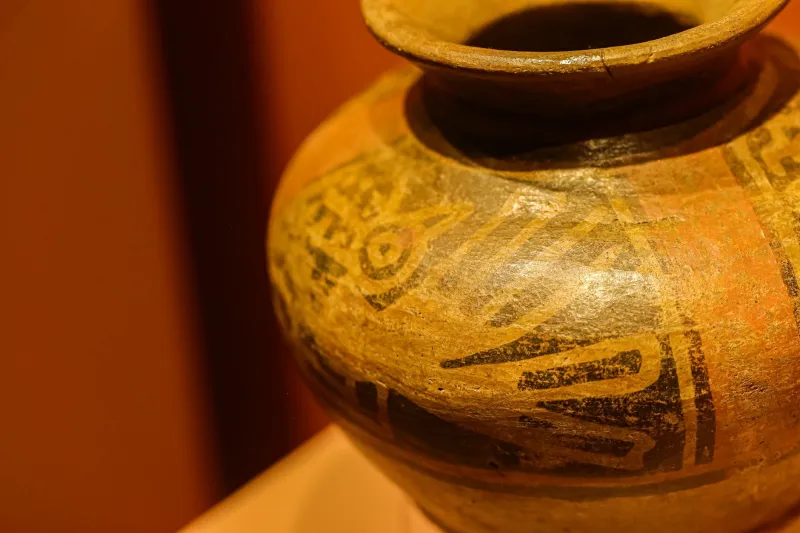
This approach — using everyday objects to externalize belief systems — is one of the most underused tools in worldbuilding. What a culture makes, and how it makes it, and what it bothers to decorate versus what it leaves plain, tells you what that culture thinks matters. A society that carves prayers into its cooking pots believes something different about the relationship between the sacred and the ordinary than one that keeps those categories strictly separate.
Good worldbuilders think about this. Great ones make it feel effortless.
The Object That Shouldn't Matter (But Does)
Sometimes the most resonant objects in a fictional universe are the ones that have no obvious reason to carry weight — and carry it anyway.
Terry Pratchett was a master of this. His Discworld is full of objects that are simultaneously absurd and oddly moving: the Luggage (a sapient piece of travel equipment made of a wood that doesn't exist), Death's hourglass collection, the way the City Watch's battered armor accumulates dents that function almost like a service record. These things are played for comedy, but they're also doing genuine emotional work. They make the world feel inhabited in a way that grander elements often don't.
The unexpected emotional object is a trust-building mechanism. When readers feel something about a fictional cup or a fictional piece of furniture, they've fully crossed over into the world. They've stopped being observers and started being participants. That's the whole game.
Building Objects That Mean Something
For writers working on their own fictional universes, the practical question is: how do you make an ordinary object carry meaning without hammering the reader over the head with its significance?
A few approaches that tend to work:
Give it a history that the character knows but doesn't explain. When a character handles an object with a specific kind of care — or a specific kind of carelessness — readers sense there's a story there. You don't have to tell it. The behavior tells it.
Let the object appear at emotionally significant moments. Repetition builds resonance. If a character reaches for the same worn compass whenever they're afraid, the compass starts to mean "fear being managed" without anyone saying so.
Use objects to mark cultural difference. When a character from one part of your world encounters an object from another and doesn't know what it's for, that moment of incomprehension can communicate entire libraries of cultural information efficiently and naturally.
Make the loss of an object feel like a loss. If you've done the work of building an object's meaning, its destruction or disappearance should land with real weight. If it doesn't, the object wasn't carrying enough.
The worlds that feel most real are the ones where even the smallest things have been thought about. Where a cup is never just a cup. Where the objects in a room tell you who lived there before you arrived, and what they valued, and what they left behind.
That's the work. And when it's done well, readers feel it in their bones without ever quite knowing why.