Sacred Blueprints: How the Best Fictional Universes Borrow from Real Religion Without Losing the Soul of It
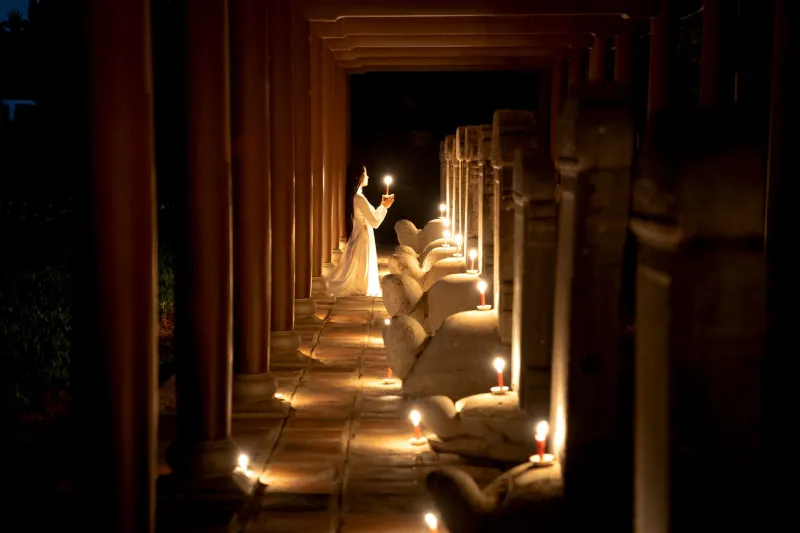
There's a moment in a lot of great fantasy or sci-fi when you feel something shift. The story stops being entertainment and starts feeling like something older — something that hums at a frequency you recognize but can't quite name. Usually, that moment has a religion behind it. Not a made-up one, exactly. One that's assembled from pieces of belief systems that actual human beings have lived and died by.
Worldbuilders do this constantly. They raid the mythological record — Greek pantheons, Norse cosmology, Shinto animism, Abrahamic prophecy — and reassemble the parts into something new. When it works, it's extraordinary. When it doesn't, it's the narrative equivalent of wearing someone's grandmother's sacred jewelry as a Halloween accessory. The gap between those two outcomes is what this is all about.
Why Real Religion Makes Better Fiction
Here's the honest answer: because it already works. Thousands of years of storytelling, ritual, and communal meaning-making have stress-tested these mythologies in ways no single author ever could. The Norse concept of Ragnarök — a fated apocalypse that even the gods can't outrun — carries a weight that's almost impossible to manufacture from whole cloth. It's been believed in. Mourned over. Used to make sense of real loss.
When a worldbuilder reaches for that, they're not just stealing a cool idea. They're tapping into a current that already runs through human consciousness. Readers feel it, even when they can't articulate why a fictional religion feels true in a way that a completely invented one sometimes doesn't.
But that same weight is exactly what makes careless borrowing so damaging. You're not just mishandling a plot device. You're mishandling something that still matters to living communities.
The Costume Problem
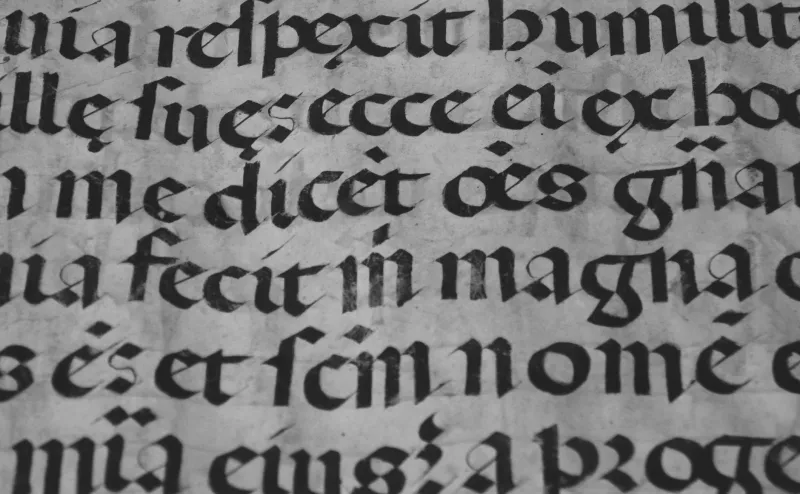
Let's call it what it is: some fictional religions are just costumes. They've got the visual vocabulary — the robes, the chanting, the sacred texts with suitably archaic fonts — but they've got no theology underneath. No internal logic. No sense that the people practicing this faith actually believe something and have organized their lives around it.
This tends to happen when a creator is drawn to the aesthetic of a tradition without engaging with its substance. You get vaguely Eastern-coded mysticism that treats Buddhism or Taoism as a mood board rather than a philosophical system with centuries of rigorous debate behind it. You get pseudo-Native American spirituality that reduces complex, tribally specific traditions into a generic "the land is alive" shorthand. You get Abrahamic monotheism stripped down to a corrupt church villain with no acknowledgment of why billions of people have found profound meaning in that tradition.
The costume problem isn't about offense, exactly — though it often is offensive. It's about craft. A religion that's only surface-deep can't carry narrative weight. It collapses under pressure because there's nothing holding it up.
What Getting It Right Actually Looks Like
The counterexample is a worldbuilder who does their homework and then goes further — who asks not just what a tradition believes, but why, and what it costs, and what it feels like from the inside.
Tolkien is the obvious starting point. His mythology in The Silmarillion draws heavily from Norse and Finnish sources — the Ainur echo the Valar of Norse cosmology, the music of creation echoes Kalevala — but Tolkien, a devout Catholic, understood that religion isn't just mythology. It's about the relationship between created beings and something greater than themselves, and the grief that comes from falling short of it. That grief is everywhere in Middle-earth. It's why the world feels sacred rather than just elaborate.
Or look at Dune, where Frank Herbert synthesized Islam, Zen Buddhism, and ecological mysticism into the Fremen faith — a system that feels internally consistent because Herbert actually understood what he was working with. The Fremen don't practice their religion as a plot device. It structures their entire relationship to water, to death, to time. It costs them something. That's what belief does.
More recently, N.K. Jemisin's Broken Earth trilogy builds a relationship between people and gods that draws on African diaspora spiritual traditions without flattening them into familiar fantasy tropes. The power dynamics between mortals and orogenes and the Guardians and the distant Seasons carry a theological weight that feels earned precisely because Jemisin isn't treating the source material as decoration.
The Line Between Inspired and Appropriated
So where's the line? It's not as clean as people want it to be, but there are a few markers worth paying attention to.
First: does the fictional religion have internal consequence? Do people who break its rules actually suffer? Do people who follow it actually gain something — not just power, but meaning? A faith that functions only as a control mechanism for villains or a shortcut to magic isn't a religion. It's a bureaucracy with incense.
Second: does the worldbuilder show reverence for the source? This doesn't mean they can't critique it — the best fictional religions often interrogate the traditions they draw from. But there's a difference between interrogating and condescending. If the only function of a real-world-coded religion in a story is to be wrong, oppressive, or primitive, that's not engagement. That's a bias with set dressing.
Third — and this is the one that separates the great worldbuilders from the good ones — does the creator seem to have actually believed in what they were building, even temporarily? Not literally. But with the kind of imaginative commitment that makes you write a thousand-year liturgical history that never appears in the main text, just because you needed to know it was there. That level of investment shows. Readers feel it. It's the difference between a world you visit and a world you remember.
Why This Matters for the Worlds We Love
Fiction that takes religion seriously — that treats it as a living system rather than a plot mechanic — does something valuable for audiences. It makes us more curious about the traditions being referenced. It makes the fictional world feel like it has depth that extends beyond the page or screen. And sometimes, in the best cases, it makes us look at our own inherited beliefs with fresh eyes.
The universes we return to again and again, the ones that feel inexhaustibly rich, almost always have a spiritual architecture holding them up. Middle-earth has its Ainulindalë. The Star Wars galaxy has the Force and its contested interpretations. Westeros has the Seven, the Old Gods, R'hllor — a whole spectrum of competing faith traditions that mirror the messy religious pluralism of actual human history.
None of those were built carelessly. And that's the point.
The best fictional religions aren't borrowed. They're transformed — taken apart, understood, and rebuilt with the kind of care that honors what made them powerful in the first place. That's not appropriation. That's the oldest creative tradition there is.