The Slow Burn: How the Greatest Fantasy Worlds Keep You Guessing Until the Very End

There's a particular kind of magic that happens when a fictional world feels genuinely old. Not old like a dusty textbook, but old the way a great-grandmother's house feels old — full of rooms you haven't opened yet, photographs of people nobody's named, and the sense that the stories soaked into the walls go back way further than you'll ever fully know. That feeling doesn't happen by accident. It's the result of a deliberate, patient craft that the most celebrated fantasy authors have quietly been practicing for generations.
We call it slow worldbuilding, and honestly? It might be the most underrated skill in speculative fiction.
The Exposition Dump Problem (And Why It Kills the Magic)
Let's be real — we've all read that fantasy novel. You crack open page one and within three paragraphs you're buried under an avalanche of place names, royal bloodlines, and cosmological backstory that reads like someone copy-pasted their worldbuilding notes directly into the manuscript. By chapter two, you're exhausted. By chapter three, you've put the book down.
Exposition dumps are tempting for writers, especially when they've spent months or years building a world they're genuinely excited about. The impulse to share everything immediately is completely understandable. But readers don't experience lore the way writers do. For a reader, information without context is just noise. The world only becomes meaningful once you care about the people living in it.
The authors who figured this out early are the ones whose universes we're still talking about decades later.
Tolkien's Footnote Strategy
J.R.R. Tolkien is the obvious starting point, but not for the reasons people usually cite. Yes, The Lord of the Rings is extraordinarily detailed. But what makes Middle-earth feel so alive isn't the volume of information — it's the way that information arrives.
Tolkien drops names, places, and ancient events into casual dialogue and then just... moves on. Characters reference the fall of Númenor, the wars of the First Age, the forging of the rings — and they do it the way real people reference history they've grown up with. There's no pause to explain. No helpful footnote in the main text. The world exists around the story like a vast iceberg, with only the tip visible at any given moment.
This creates a specific kind of reader hunger. You don't just want to know what happens next in the plot — you want to understand the world. That's why The Silmarillion has a dedicated readership despite being, let's be honest, a pretty demanding read. Tolkien built the appetite first, then offered the feast.
Sanderson's Cosmere and the Art of the Long Game
Brandon Sanderson has taken slow worldbuilding into the modern era with the Cosmere — a shared universe spanning over a dozen novels set on different planets, each with its own magic system, history, and culture. On the surface, each book works as a standalone or series. But underneath, there's a connective tissue of recurring characters, cosmic forces, and ancient conflicts that only reveals itself gradually across years of reading.
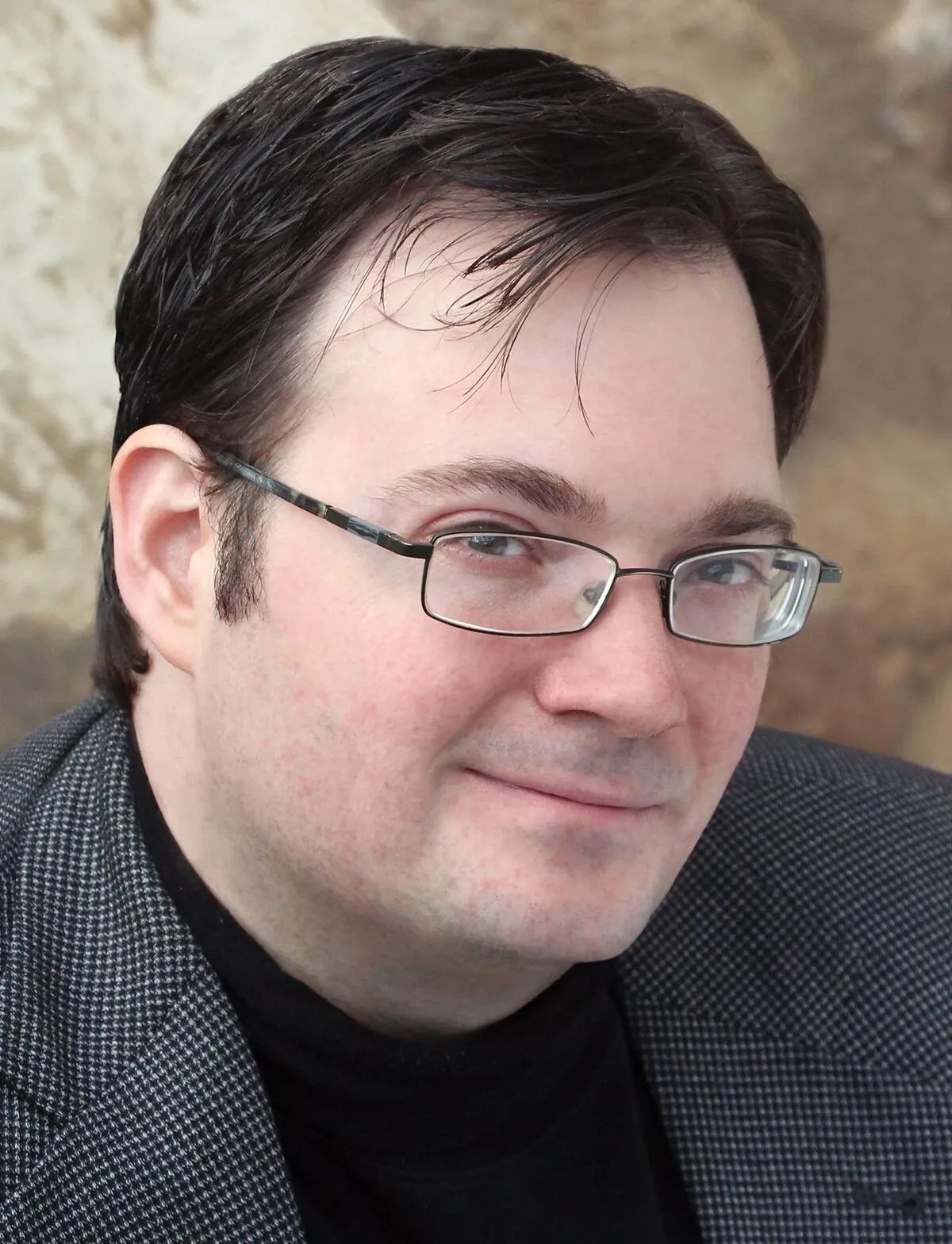 Photo: Brandon Sanderson, via uploads.coppermind.net
What Sanderson does brilliantly is layer his reveals. A minor character in The Way of Kings turns out to be central to The Stormlight Archive as a whole. A throwaway reference in Elantris becomes significant three books later. He plants seeds knowing full well that many readers won't catch them on the first pass — and that when they do catch them, the discovery feels earned and electrifying.
This is the community dimension of slow worldbuilding that Sanderson has arguably mastered better than anyone. His fans don't just read his books; they build wikis, argue theories, and share "Cosmere connections" like trading cards. The gradual revelation isn't just a narrative technique — it's a social experience.
Le Guin's Quiet Ambiguity
Ursula K. Le Guin took a different approach with her Hainish Cycle, and it's one that doesn't get nearly enough credit. The Hainish universe — which includes The Left Hand of Darkness, The Dispossessed, and several other novels and stories — is bound together by a shared ancient history of a species called the Hainish who seeded humanity across the galaxy. But Le Guin never fully explains this. She never writes the origin story. She gives you fragments, suggestions, and cultural echoes, and then trusts you to sit with the uncertainty.
This strategic ambiguity is incredibly powerful. It mirrors how real cultures experience their own histories — incomplete, contested, filtered through myth and time. The Hainish universe doesn't feel like a constructed fiction; it feels like an anthropological record of something that actually happened somewhere. That's a staggering achievement, and it's entirely built on restraint.
Le Guin understood that mystery isn't a gap to be filled. Sometimes it's the point.
Techniques You Can Actually Use
If you're building your own world — whether for a novel, a tabletop campaign, a web serial, or just the sheer joy of it — here are some practical takeaways from the masters.
Let characters reference things they don't explain. Real people don't stop to define terms they've known their whole lives. Your characters shouldn't either. Drop the name of an ancient war or a forgotten god and let it sit there. Your readers' imaginations will do half the work for you.
Use unreliable in-world texts. Tolkien did this, Sanderson does this constantly, and it's a goldmine. An in-universe history book written by a biased author, a religious text that contradicts itself, a legend that your protagonist knows is probably false — these create layers of interpretation that make a world feel genuinely complex.
Decide what you're not going to reveal. This might be the most counterintuitive piece of advice, but it's crucial. Before you write, identify two or three mysteries about your world that you will never fully explain on the page. These become the gravitational centers of your universe — the things readers will think about long after they've finished.
Earn the lore drops. Information hits differently when it arrives at the moment of emotional resonance. Learning that a character's homeland was destroyed means nothing on page five. Learning it in the middle of a scene where they're trying to protect someone else? That's when it lands.
Patience Is a Worldbuilding Superpower
Here at The Slotharian Chronicles, we spend a lot of time celebrating the fictional universes that have genuinely gotten under our skin — the ones we come back to, argue about, and dream about long after the last page. And looking across that list, the common thread isn't complexity or scale or even prose quality. It's patience.
The worlds that endure are the ones built by writers who trusted their readers enough to let the mystery breathe. Who understood that a world half-glimpsed is more compelling than a world fully explained. Who were willing to play the long game.
So if you're worldbuilding right now — and we hope you are — resist the urge to explain everything. Let your world have shadows. Let it have rooms you haven't opened yet. That's where the real magic lives.