The Slow Coach: Why Fiction's Greatest Mentors Never Seem in a Hurry
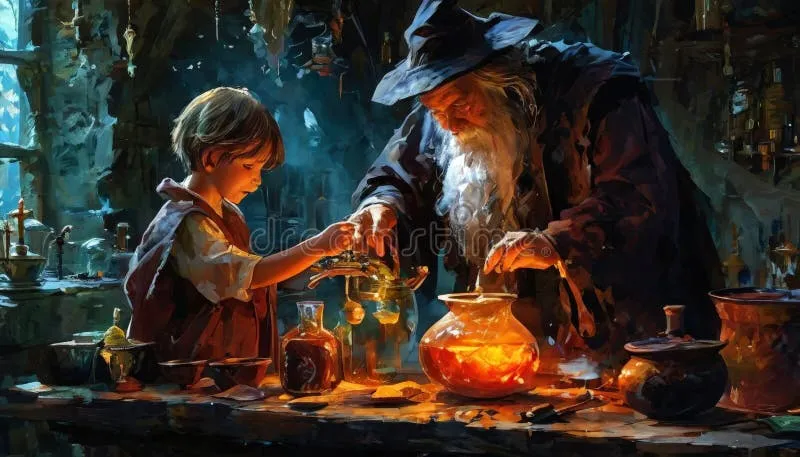
Photo: old wizard mentor teaching young student candlelight fantasy, via thumbs.dreamstime.com
Picture the scene: a shadow is spreading across the map, an ancient evil is waking up, and the fate of everyone you love hangs by a thread. And your mentor? He's making small talk about second breakfast. He's dodging your questions for the third time this chapter. He's off smoking a pipe when he could be, you know, saving the world.
We've all yelled at the screen. But here at The Slotharian Chronicles, we like to think the sloth gets a bad rap — and so does the slow mentor. Because when you actually look at why these guides delay, distract, and downright dawdle, you find that the slowness isn't a flaw in the story. It's the engine of it.
The Information Diet No One Asked For
Start with the obvious: mentors hoard information like dragons hoard gold. Gandalf spends decades — decades! — researching the Ring before he tells Frodo anything useful. Dumbledore lets Harry stumble through an entire school year of mysteries before dropping one cryptic clue, usually right before exams.
From a plot standpoint, this is obvious sleight of hand. If Dumbledore sat twelve-year-old Harry down and explained horcruxes over cocoa, the series ends in book two. But the great worldbuilders dress up the withholding in character logic. Gandalf doesn't explain because hope is fragile and certainty can be a burden. Dumbledore doesn't explain because — and this is the uncomfortable one — he's managing Harry, not counseling him.
That tension is what makes mentor figures feel real. A guide who tells you everything is a walking wiki. A guide who makes you earn every scrap of truth is a character with an agenda, a fear, a past.
Slowness as a Teaching Method
There's also a genuinely defensible reason mentors drag their feet: you can't hand someone wisdom any more than you can hand them a callus. In The Karate Kid, Mr. Miyagi has Daniel waxing cars for weeks before any fighting starts, and Daniel thinks it's nonsense — until the muscle memory kicks in. In The Matrix, Morpheus could download kung fu into Neo's brain, but he can't download the belief that he's The One. That part takes falling down, getting up, and doing it again.
Fiction keeps returning to this idea because we recognize it from our own lives. Nobody learns to drive by reading the manual. The mentor who says "figure it out" is often the one who actually respects you.
When Slowness Crosses Into Something Darker
Of course, let's not romanticize it. Some fictional mentors are slow for genuinely bad reasons, and the best modern stories are increasingly honest about that. Dumbledore's entire posthumous arc — via that revealing conversation with Snape — is an admission that his careful pacing had a body count. He wasn't just being wise. He was being calculating.
That shift matters. Older genre fiction treated the mentor's silence as inherently noble. Newer fiction asks: who paid the price for all that patience? It's a question that has migrated into the mainstream, and it's made the archetype richer. The mentor is no longer automatically the moral center. Sometimes they're the most morally complicated person in the room.
The Pace the World Sets
There's a final, quieter function to mentor slowness, and it's one that hits differently for an American audience raised on hustle culture. Fictional worlds are full of urgency — deadlines, prophecies, ticking clocks. The mentor is often the only character who refuses to match that panic.
Think about how many key mentor scenes happen over a meal, a pipe, a cup of tea. The instruction is delivered at a kitchen-table pace while the plot gallops outside. That contrast is deliberate. The mentor models a different relationship with time: the belief that the important things can't be rushed, and that a hero who sprints before they can walk will die tired.
In a genre obsessed with chosen ones and destiny, the slow mentor is the counterweight. They're the story saying: the journey matters more than the arrival, and anyone who promises you a shortcut is selling something.
So the next time a wizard gives your hero a riddle instead of an answer, don't reach for the remote. Reach for the snacks. You're going to be here a while — and that's exactly the point.