Claws, Contracts, and Commerce: Why the Best Fictional Creatures Have a Bottom Line
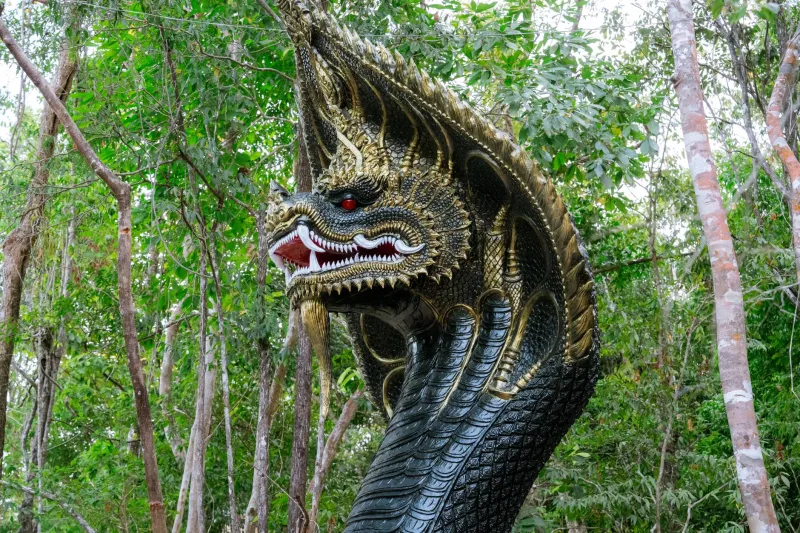
Let's be honest: most monsters are basically furniture. They show up, they roar, they threaten the protagonist, and then they either get killed or conveniently wander off. They exist to raise the stakes, not to pay rent. But the fictional universes that genuinely stick with us — the ones people are still arguing about on Reddit at two in the morning — tend to do something different. They give their creatures a job.
Not literally, of course. Nobody's handing a sandworm a W-2. But the best worldbuilders understand that a creature embedded in the economic and ecological fabric of its world feels fundamentally different from one that's just dropped in to be menacing. It feels necessary. And necessary is the highest compliment you can pay anything in a fictional universe.
The Worm That Runs the Galaxy
Start with the sandworms of Arrakis in Frank Herbert's Dune, because there's genuinely no better example in the history of speculative fiction. The Shai-Hulud aren't just dangerous — they are the entire reason anyone cares about that miserable, sun-scorched planet in the first place.
Melange, the spice that makes interstellar travel possible, is a byproduct of the sandworm life cycle. That single ecological detail rewires everything. Suddenly, a 400-meter-long predator isn't just a threat to be avoided — it's a commodity, a deity, a geopolitical variable. The Fremen have built their entire culture around living with the worm rather than against it. The Spacing Guild needs the worm to exist, or their pilots go blind and the empire collapses. House Harkonnen and House Atreides are essentially fighting a land war over the worm's bathroom habits.
Herbert didn't just create a scary creature. He created a creature with an economic footprint so massive that removing it would cause civilizational collapse. That's the difference between a monster and a stakeholder.
Dragons as Livestock, Dragons as Lords
George R.R. Martin's dragons in Game of Thrones and House of the Dragon occupy a fascinating dual role that most casual viewers probably never fully unpacked. On one level, they're weapons — the nuclear option of Westeros. But dig a little deeper and you start to see the economic machinery underneath.
Dragonfire isn't just destructive; it's productive. The Targaryens used dragons to forge the Iron Throne literally and politically. Dragon bones show up in the architecture of King's Landing. The sheer presence of a dragon functions as a currency of deterrence — one that other houses have to factor into every alliance, every betrayal, every war chest calculation.
When the dragons die out between the original Targaryen conquest and the events of Game of Thrones, that absence reshapes the entire political landscape. Power becomes more diffuse, more negotiable, more democratic in the worst possible way. The dragon's economic role — as a force multiplier, a deterrent, a symbol of monopolized violence — leaves a hole in the world's balance sheet that the whole story is essentially trying to fill.
Martin understood that a creature's absence can be just as economically significant as its presence. That's sophisticated worldbuilding.
The Na'vi Didn't Just Live With the Animals
Avatar gets a lot of grief for its story beats, but the worldbuilding around Pandora's fauna is quietly brilliant in economic terms. The ikran — those flying predators the Na'vi bond with — aren't pets or mounts in any simple sense. They're infrastructure.
The Na'vi's ability to move quickly across Pandora's vertical, densely forested terrain depends entirely on their relationship with these creatures. That relationship, mediated through the neural bond of tsaheylu, isn't just spiritual — it's logistical. It determines hunting range, communication speed, and territorial reach. The ikran effectively sets the geographic boundaries of Na'vi society.
Meanwhile, from the RDA's perspective, Pandora's megafauna represents a constant operational cost. Every creature that can flip an armored vehicle is a line item in the security budget. The creatures aren't just obstacles; they're the reason unobtanium extraction is so expensive, which is the reason the RDA is so desperate, which is the reason the whole conflict exists. The economy of violence on Pandora runs directly through its ecosystem.
Migration Patterns Are Market Forces
Here's a concept that doesn't get nearly enough attention in discussions of fictional worldbuilding: migration. Real-world economies have been shaped by animal migration for millennia — think of the buffalo and the Plains Nations, or the seasonal fish runs that built entire coastal cultures. The best fictional worlds apply the same logic.
In The Witcher universe, monster contracts aren't random. Geralt doesn't just wander into towns and find convenient beasts to slay. The distribution of monsters follows ecological and migrational logic — nekkers cluster near water, drowners follow river systems, leshy appear where forests are being cleared. That logic creates an informal economy around monster hunting that feels genuinely grounded. Villages near migration corridors need witchers more often. Witchers with knowledge of those corridors charge accordingly.
That's a functioning labor market built entirely on creature behavior. Andrzej Sapkowski essentially wrote a gig economy before gig economies were a cultural concept, and the monsters are the reason it exists.
Why Forgettable Monsters Are Economically Homeless
Flip the lens for a second and look at what happens when creatures don't have economic grounding. Generic fantasy beasts — your standard cave trolls, your undifferentiated swamp monsters — tend to blur together precisely because they don't do anything to the world around them. They're not part of any food chain that matters. Nobody trades their pelts. No settlement patterns shift because of where they nest.
They exist only to be obstacles, and obstacles, by definition, are temporary. You go around them or through them, and the world stays exactly the same.
Contrast that with something like the kaiju in Pacific Rim, which — despite the film's relatively thin worldbuilding — at least gestures toward economic consequence. Coastal cities depopulate. Defense spending restructures entire governments. A black market for kaiju organs emerges. Even in a blockbuster action movie, the creature's economic footprint makes it feel like it belongs to the world rather than just passing through it.
The Takeaway for Anyone Building a World
If you're a worldbuilder — whether you're writing a novel, designing a tabletop campaign, or just daydreaming elaborate fictional universes the way some of us definitely do — the question worth asking about every creature you create is simple: what happens to the economy if this thing disappears?
If the answer is "nothing," you've got furniture. If the answer involves trade routes, political alliances, cultural rituals, or resource dependencies, you've got something that lives and breathes inside your world rather than just haunting the margins of it.
The sandworm runs the spice trade. The dragon enforces dynastic legitimacy. The ikran sets the boundaries of Na'vi civilization. These aren't monsters with mortgages in any literal sense — but they all have something to lose, something to protect, and something the world genuinely needs from them.
That's what makes them unforgettable. Not the teeth. The bottom line.