The Trap Disguised as a Gift: How Fictional Universes Turn Prophecy Into a Leash
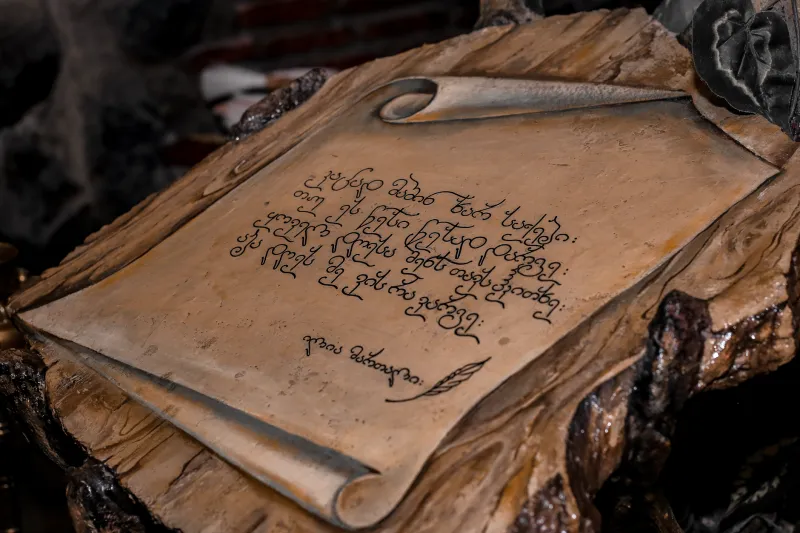
There's a moment in almost every great fantasy or sci-fi story where someone unrolls a scroll, reads from a crumbling tablet, or whispers a vision into a hero's ear — and everything changes. The prophecy has arrived. Destiny is locked in. And the audience is supposed to feel a swell of excitement, like the universe itself just signed off on the hero's importance.
But here's the thing: in the best fictional universes, that moment isn't a gift. It's a trap.
The most thoughtful worldbuilders have figured out something that casual storytelling often misses — prophecy is less interesting as a divine roadmap and infinitely more compelling as a mechanism of control. When you look closely at how the greatest fictional worlds deploy fate, you start to see the strings. Institutions pull them. Gods pull them. Power structures that have everything to gain from a hero marching obediently toward a predetermined end pull them hardest of all.
The Institution Behind the Oracle
Let's start with Frank Herbert's Dune, because it's basically the doctoral thesis on this subject. Paul Atreides doesn't stumble into messianic destiny — he gets manufactured into it. The Bene Gesserit sisterhood spent generations engineering a bloodline, seeding religious mythology across entire planets, and carefully constructing the cultural conditions that would make a population need a Kwisatz Haderach to exist. By the time Paul shows up on Arrakis, the prophecy isn't a cosmic truth. It's a long con.
What makes Herbert's construction so brutal is that Paul knows this, at least partially, and it doesn't matter. The machinery is already running. The Fremen believe. The story has momentum. And Paul, despite his prescient awareness of the trap, walks into it anyway — because the alternative is watching everyone he loves die. That's not a hero fulfilling destiny. That's a man being crushed by a system that needed a symbol more than it needed a person.
Herbert is essentially asking: what's the difference between a prophecy and propaganda? And his answer is uncomfortable — not much, if the right people control the narrative long enough.
The Chosen One as Institutional Product
The "Chosen One" framework gets a lot of mockery these days, and fair enough — it's been run into the ground by stories that treat it as a shortcut to stakes rather than a source of genuine tension. But when worldbuilders actually interrogate the trope instead of just deploying it, something fascinating happens.
Take the Star Wars prequel trilogy's handling of Anakin Skywalker. The Jedi Council receives a prophecy about someone who will bring balance to the Force, and their response is to immediately try to control, train, and institutionalize the kid. They don't ask whether the prophecy is accurate. They don't ask what "balance" actually means. They just absorb him into their system and start shaping him toward whatever outcome they've already decided the prophecy describes.
The tragedy of Anakin isn't just personal. It's structural. The prophecy becomes a justification for the Jedi to override their own doubts, ignore obvious warning signs, and treat a human being as a cosmic instrument rather than a person with needs and fears. And then they're shocked — shocked — when the instrument breaks. The prophecy didn't fail. The institution that weaponized it did.
When Gods Play Both Sides
Sometimes the manipulation isn't coming from mortals at all. Some of the richest fictional universes make their gods the ones pulling the strings — and the cruelest part is that divine prophecy often isn't about helping the hero succeed. It's about ensuring the hero moves.
In The Wheel of Time, the Dragon Reborn is foretold to both save the world and break it. Rand al'Thor spends the better part of fourteen books being shoved toward a destiny that multiple factions interpret differently, use for their own purposes, and manipulate him through. The Pattern itself — the universe's fundamental structure — seems almost indifferent to whether Rand survives the process. It just needs the outcome. He's a tool the cosmos is using, and his personal survival is a secondary concern at best.
This is worldbuilding at its most philosophically honest. If an all-knowing force genuinely foresaw the future and encoded it into prophecy, why would it care about the well-being of the person carrying it out? The prophecy serves the prophecy. The hero serves the prophecy. Everyone else is furniture.
The Question of Agency
Here's where prophecy-as-weapon gets really interesting from a worldbuilding perspective: the best fictional universes force their heroes — and their audiences — to genuinely grapple with whether fulfilling a destiny constitutes a win.
Harry Potter defeats Voldemort, but Dumbledore knew from early on that Harry would need to die first. He cultivated Harry's courage, his loyalty, his willingness to sacrifice — specifically because those traits would make Harry walk to his own death without flinching. Dumbledore loved Harry, probably genuinely. He also used him. Both things are true, and the story is richer because it doesn't fully resolve the tension between them.
When Neville Longbottom could have been the Chosen One just as easily, the story is quietly admitting that prophecy is partly about selection and partly about construction. The universe didn't choose Harry. Voldemort did, by attacking him. And then the institutions around Harry — Dumbledore, the wizarding world's expectations, the prophecy itself — built a person capable of fulfilling a role that was always, on some level, assigned rather than discovered.
What This Means for the Worlds We Build
For worldbuilders, this is genuinely useful territory to explore. Prophecy is most powerful not when it tells your hero what to do, but when it raises the question of who benefits from them doing it. Who recorded the prophecy? Who translated it? Who decided this particular hero was the one it described, and what did they gain from that interpretation?
The best fictional universes don't just have prophecies. They have economies of prophecy — systems of belief, power, and interpretation that determine whose version of fate gets enforced and whose gets ignored. That's where the real drama lives.
Because at the end of the day, a prophecy that simply comes true is just a spoiler. A prophecy that traps a brilliant, complicated person inside a story written by someone else — and makes them fight to decide what fulfilling it even means — that's something worth reading about.
Destiny is most interesting when it has an agenda. And the best worldbuilders never let us forget who wrote it down in the first place.