Life Finds a Way — And Then Gets Eaten: How the Best Fictional Worlds Build Ecosystems That Actually Work
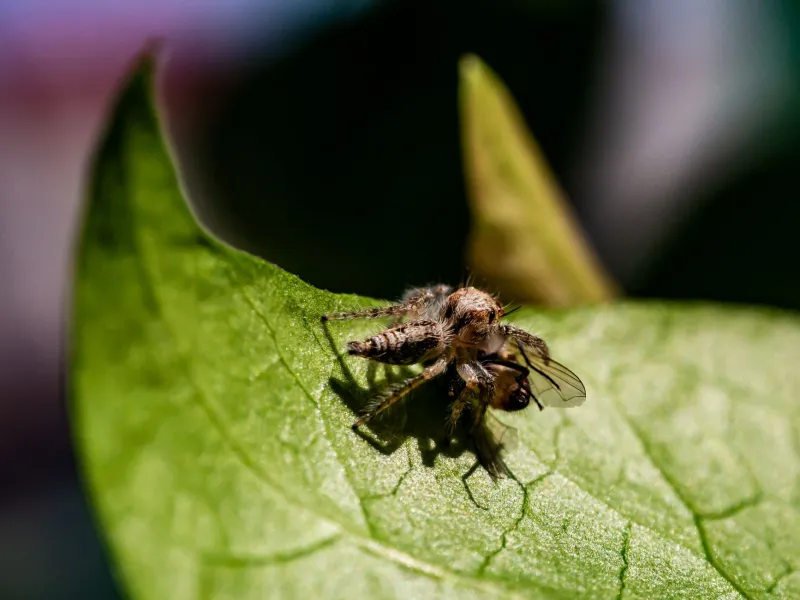
There's a moment in every great sci-fi or fantasy story where you stop asking "is this real?" and start asking "how does this work?" That shift — from suspension of disbelief to genuine curiosity — is the holy grail of worldbuilding. And more often than not, the thing that triggers it isn't a dramatic magic system or a sleek starship. It's a food chain.
Yeah. A food chain.
The best fictional universes aren't just decorated with interesting creatures — they're structured around them. Every organism has a role. Every predator needs prey. Every ecosystem has a logic that, if you pulled on the right thread, would unravel in a way that makes total biological sense. That's not an accident. It's craft. And the worldbuilders who do it best are, in many ways, functioning as amateur ecologists.
Arrakis Didn't Just Have Sandworms — It Had a Whole Desert Logic
Frank Herbert's Dune is the gold standard for this kind of thinking, and it deserves every bit of that reputation. Arrakis isn't just a desert planet with big scary worms — it's a closed ecological system Herbert spent years designing from the sand up.
The sandworms aren't random monsters. They're the keystone species of an entire biosphere. Their larvae produce the spice melange as a metabolic byproduct. The spice contaminates the water table, which is why open water is lethal to sandworms. The Fremen, in turn, have built their entire culture around water scarcity because the ecosystem demands it. Pull any one piece out and the whole thing collapses.
Herbert was reportedly influenced by a real-world study of sand dune ecology in Oregon — specifically the way introduced plants disrupted existing desert systems. He took that idea and scaled it to a planetary level. The result is a world that feels like it existed before the first page and will keep existing long after the last one.
That's what coherent ecosystem design does. It creates the illusion of a universe that doesn't need you to believe in it because it was already running just fine on its own.
Pandora's Magic Wasn't Spiritual — It Was Biological
James Cameron caught a lot of flak for Avatar's story, but the worldbuilding team behind Pandora built something genuinely remarkable. The Na'vi's neural queues — those bioluminescent tendrils they use to bond with animals and trees — aren't mystical. They're biological interfaces. The entire planet functions as a distributed neural network, with the flora and fauna serving as nodes in a planetary-scale organism.
That idea isn't pulled from nowhere. It's loosely based on real mycorrhizal networks — the underground fungal systems that allow trees to share nutrients and even chemical signals. Scientists sometimes call it the "wood wide web." Cameron's team essentially asked: what if that system got weirder, faster, and sentient?
Every creature on Pandora has the same neural interface structure. That means they didn't evolve independently — they co-evolved as part of a shared system. Predators and prey, plants and animals, all wired into the same biological internet. It's a strange idea, but it's internally consistent. And internal consistency is everything.
Ursula K. Le Guin Knew That Climate Is Character
If Herbert built his world from the ground up and Cameron built his from the canopy down, Ursula K. Le Guin built hers from the atmosphere out. The Left Hand of Darkness is set on Gethen, a planet locked in perpetual winter. But Le Guin didn't just use the cold as atmosphere — she used it as biology.
Gethenians are ambisexual, entering a brief fertile period called kemmer before returning to a neutral state. Le Guin argued that this wasn't a random quirk — it was an evolutionary adaptation to a harsh climate where constant sexual competition would be a lethal energy drain. In a world where survival requires cooperation, biology evolved to reduce social friction.
That's ecology applied to culture. The ecosystem doesn't just affect what animals live where — it shapes the physiology, sociology, and politics of every intelligent species that evolved within it. Le Guin understood that you can't separate a creature from its environment, and she built her worlds accordingly.
Why Most Fictional Creatures Don't Actually Work
Here's the uncomfortable flip side: a lot of fictional ecosystems are kind of a mess.
Dragons are a classic example. A flying, fire-breathing predator of that size would require an absolutely staggering caloric intake. What are they eating? How often? Where are the massive herds of prey animals that would need to exist to support even a small dragon population? Most fantasy worlds just... don't answer that question. The dragons are there because they're cool, and the ecosystem bends around them.
That's fine for some stories. Not every fantasy novel needs to double as a biology textbook. But there's a reason worlds like Arrakis and Pandora stick with us decades later while others fade — coherence creates investment. When a world's biology makes sense, every new creature you encounter feels like a discovery rather than an invention.
The same principle applies to plant life, microbial ecosystems, and atmospheric chemistry. What does the air smell like on a world with triple the oxygen of Earth? What happens to fire? What kinds of organisms thrive? These aren't just fun questions — they're the questions that separate a setting from a world.
The Biology Is the Lore
There's a tendency in genre communities to treat lore as the stuff in appendices — the history, the mythology, the political lineages. But ecological lore might be the most foundational layer of all. It's the reason a civilization developed where it did, ate what it ate, fought over what it fought over, and believed what it believed.
The spice on Arrakis is why the Imperium exists. Pandora's neural network is why the RDA wants to mine it and why the Na'vi can't let them. Gethen's climate is why its people never developed the concept of war the way Earthlings did. In every case, the biology isn't background — it's the engine.
Worldbuilders who get this right aren't just building better settings. They're building better arguments for why their stories had to happen the way they did. And that, maybe more than any other single craft decision, is what makes a fictional universe feel like it was discovered rather than invented.
So next time you're deep in a new fantasy series or a sci-fi epic, look past the magic and the starships. Ask what's eating what. Ask what happens when the rains don't come. Ask what the predators do when the prey runs out.
The answers, if the worldbuilder did their job, will tell you everything.