The Quiet Catastrophe: When Fictional Worlds Fall Apart From the Inside Out
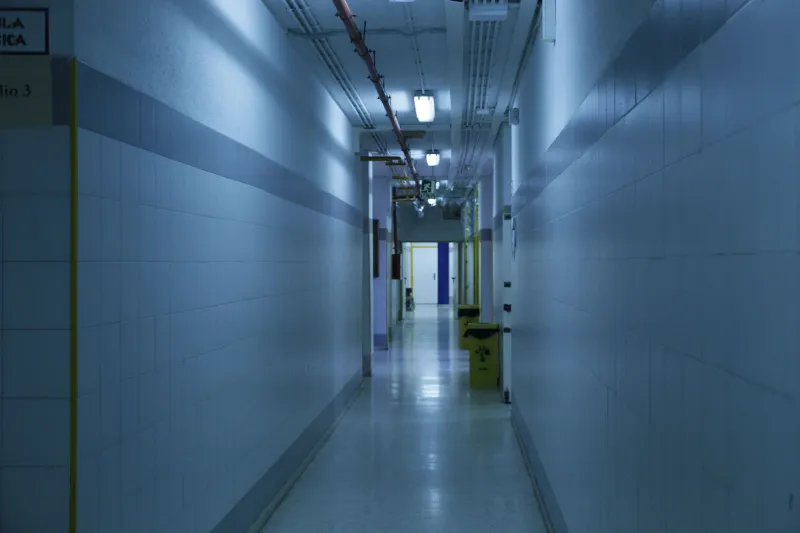
There's a particular flavor of dread that no monster can manufacture. It doesn't come with fangs or a menacing score. It comes with a form to fill out, a policy that hasn't been updated since the last administration, and a shrug from someone who has eight more appointments after yours. It's the dread of a system that doesn't hate you — it just doesn't particularly notice you, and the outcome is the same either way.
The best speculative fiction knows this dread intimately. And the best worldbuilders have figured out that nothing destabilizes a fictional universe quite like the slow, unremarkable grind of institutions doing exactly what they were built to do — just for the wrong people, or past their expiration date, or with a casual indifference that amounts to cruelty.
Evil That Clocks In and Clocks Out
Hannah Arendt's concept of the "banality of evil" — the idea that atrocity is often carried out not by monsters but by ordinary functionaries following procedures — has infected speculative fiction in the most productive way imaginable. The genre is uniquely positioned to externalize and literalize this concept, to build entire worlds around the horror of the unremarkable.
Kafka got there first, technically, but sci-fi and fantasy ran with it. The bureaucratic nightmare of Brazil (Terry Gilliam's 1985 film, which might be the most thorough cinematic exploration of this idea) depicts a future dystopia maintained not by jackbooted thugs but by paperwork errors, interdepartmental miscommunications, and a heating engineer who just wants to do his job. The terror isn't in any single act of malice. It's in the aggregate weight of a system that processes human beings like invoices.
This is the mundane monster at full power: a threat that cannot be punched, negotiated with, or dramatically defeated. You can't give a rousing speech to a filing system.
The Slow Rot of the Ordinary
In fantasy, this phenomenon shows up most clearly in civilizations that have simply... stopped noticing. Tolkien's Gondor, by the time we arrive in The Return of the King, is a kingdom running on institutional memory and tradition, with a Steward who has long since given up hope of anything better. The systems are intact. The city is magnificent. And the whole apparatus is pointed in the wrong direction, administered by a man in the grip of despair who has confused the preservation of form with the preservation of function.
Denethor isn't evil in the cartoonish sense. He's a capable administrator who ran out of belief. And that absence — that bureaucratic faithlessness — nearly costs Gondor everything. The enemy at the gate is dramatic and visible. The enemy inside the administrative structure is what almost wins.
This is what makes the mundane monster so effective as a worldbuilding element: it requires no special origin story. It grows naturally from any institution that outlasts its purpose or loses sight of the people it was built to serve.
When Normalcy Is the Threat
Contemporary speculative fiction has become increasingly interested in worlds that look almost fine. The dystopia isn't announced — it's ambient. You notice it in the small things. The way certain people have to show their papers more often. The way certain neighborhoods don't show up in the delivery radius. The way the news covers some disasters extensively and others barely at all.
Octavia Butler's Parable of the Sower is devastating precisely because its near-future America isn't dramatically different from the present one. The collapse is incremental. The violence is already present, just unevenly distributed. The systems that fail — public safety, infrastructure, social trust — don't fail all at once. They fray. And the characters who survive are the ones who noticed the fraying early, while everyone else was still reassuring themselves that things were basically okay.
This is the mundane monster's most insidious quality: it exploits the human tendency to normalize. We adjust. We accommodate. We tell ourselves the new baseline is fine because it's the only baseline we have left. And fictional worlds that capture this mechanism are doing something genuinely important — they're making visible the process of accommodation that real societies perform constantly and unconsciously.
Complacency as a Civilizational Force
Some fictional worlds don't even need an active oppressor. They just need enough complacency, distributed evenly across a population, to achieve the same effect.
The Capitol in The Hunger Games is a useful example here. The districts are oppressed, yes, but the Capitol citizens aren't primarily villains — they're participants. They watch the Games as entertainment. They engage with the tributes as celebrities. They've built elaborate social rituals around an event that is, at its core, the annual murder of children. Nobody in the Capitol invented this system. They inherited it, were socialized into it, and found ways to make it feel normal. The monster is the normalization itself.
This is why Katniss's most powerful act in the early books isn't violence — it's refusal. Refusing to perform for the cameras. Refusing to pretend the Game is a game. She doesn't defeat the system with force; she denies it the performance it needs to maintain its fiction of normalcy. The mundane monster depends on everyone agreeing to act like it isn't monstrous.
Building the Invisible Threat
For worldbuilders, the mundane monster presents a genuine craft challenge. Dramatic threats are easy to write. A dragon has presence, agency, set pieces. A bureaucracy has... meetings. Memos. The slow accumulation of small injustices that individually seem minor and collectively constitute a horror.
The trick, as the best writers demonstrate, is specificity. The mundane monster becomes real when you can see exactly how it works — the specific form that gets lost, the specific policy that hasn't been updated, the specific person whose job it is to process the complaint and whose incentive structure ensures they never resolve it. Abstraction lets readers off the hook. Specificity makes them uncomfortable in the right way.
Because the quiet catastrophe isn't a fantasy. Not entirely. Anyone who's spent an afternoon on hold with an insurance company, or watched a neighborhood slowly hollow out as services quietly withdrew, or noticed which stories make the news and which ones don't — they already know the mundane monster.
Fiction just gives it a name. And sometimes, that's the first step toward refusing to pretend it isn't there.