Rooting for the Wrong One: How Fictional Universes Built Villains Too Human to Hate
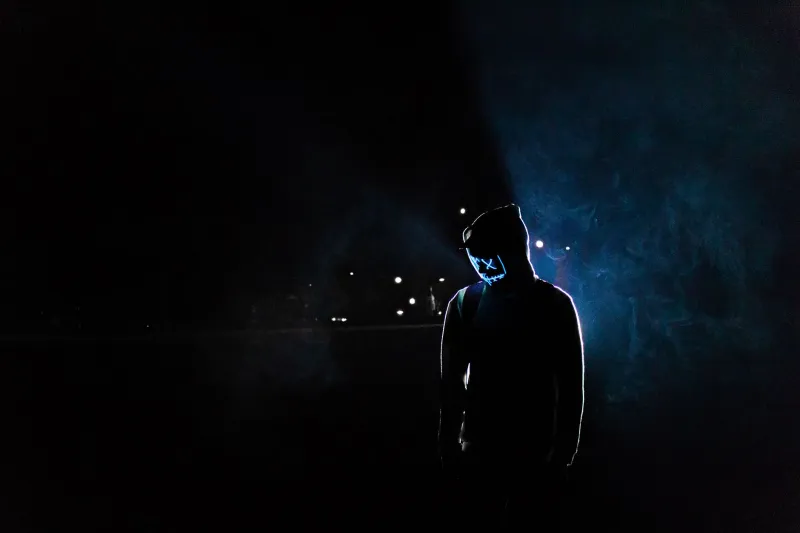
Somewhere between your first watch of Return of the Jedi and your fifth, something shifts. You stop seeing Darth Vader as the black-helmeted symbol of galactic tyranny and start seeing a broken man in a suit of armor he never asked for. That shift isn't an accident. It's the result of some of the most careful, deliberate worldbuilding in science fiction history — and it's happening all over your favorite fictional universes whether you've noticed or not.
The greatest antagonists in sci-fi and fantasy aren't great because they're menacing. They're great because, at some point, you realize you understand them. And that realization? That's the whole game.
The Architecture of a Convincing Monster
Here's the thing about building a villain that sticks: you can't just hand them a black cloak and a motive involving world domination. Audiences — especially the deeply invested fan communities that keep fictional universes alive for decades — will see through that in about thirty seconds. What they can't shake is a backstory that makes terrible sense.
Magneto is the textbook case. On the surface, he's the guy trying to start a war between mutants and humans. He's the obstacle. The threat. But Erik Lehnsherr is also a Holocaust survivor who watched the world decide that people like him were expendable. His entire worldview was forged in a concentration camp. When he says he will never let his people be herded into camps again, he's not being melodramatic. He's being logical — at least by the brutal internal rules of the universe the X-Men stories inhabit. The worldbuilding surrounding Magneto doesn't excuse his extremism. It just refuses to let you dismiss it.
That refusal is everything.
Cersei Lannister and the World That Built Her
George R.R. Martin's Westeros is maybe the most morally exhausting fictional universe ever constructed, and that's a compliment. Nobody in that world is operating from a position of pure virtue. Power corrupts, survival demands compromise, and the systems in place — monarchy, patriarchy, feudalism — grind people into shapes they never chose.
Cersei Lannister gets introduced as a villain. Cold, calculating, willing to destroy anyone who threatens her children or her grip on the Iron Throne. Easy to hate, right? Except Martin's worldbuilding keeps pulling back the curtain. Here is a woman of extraordinary intelligence who was told, her entire life, that intelligence in a woman is a liability. Here is someone who loved fiercely and was handed a husband who treated her as a political transaction. The world of Westeros didn't just produce Cersei's cruelty — it required it from her if she wanted to survive.
Fan communities picked up on this almost immediately. The Cersei discourse online is genuinely fascinating — half the conversation is about holding her accountable for genuinely monstrous choices, and the other half is about acknowledging that the world she lived in left her almost no other options. That tension? That's Martin's worldbuilding doing exactly what it was designed to do.
When the Hero's Story Is the Villain's Tragedy
One of the sneakiest tricks in genre storytelling is telling the same events from two different vantage points and watching the moral math completely change. Wicked built an entire cultural phenomenon out of this idea — take the Wicked Witch of the West, give her a name and a history and a cause she genuinely believed in, and suddenly Dorothy's triumphant story starts looking like something else entirely.
This is a worldbuilding choice, not just a character choice. When a fictional universe is constructed with enough depth that it can support multiple legitimate perspectives on the same conflict, the creator is essentially telling you: there is no clean answer here. The world is big enough and complicated enough that good people can end up on opposite sides of the same war.
That's the Rebel Alliance versus the Empire, examined from the right angle. That's every faction conflict in Brandon Sanderson's Stormlight Archive. That's the entire premise of Avatar: The Last Airbender, where even the Fire Nation's aggression is rooted in a corrupted version of something that was once genuine pride and purpose.
Fan Culture Finishes the Job
Here's where it gets really interesting. Creators build the foundation, but fan communities are often the ones who excavate the moral complexity all the way down. Tumblr threads, Reddit deep-dives, fan fiction, YouTube video essays — these spaces have produced some of the most sophisticated villain analyses you'll find anywhere, and they've done it by taking the worldbuilding seriously.
When fans write redemption arcs for characters the original text left unredeemed, they're not ignoring canon. They're following the internal logic of a world that was built with enough nuance to support those conclusions. When someone writes a Loki-centric fic that reframes every antagonistic choice he made as a response to centuries of psychological manipulation, they're doing worldbuilding work. They're asking: given everything this universe established about this character's history, what else could he have become?
The best fictional universes invite that question. The lesser ones don't bother to build the scaffolding that would make it answerable.
The Blurred Line Was Always the Point
If you've ever finished a book or a season of television and found yourself arguing that the villain had a point — not that they were right, but that they had a point — you've experienced the payoff of genuinely ambitious worldbuilding. The creators of those universes didn't accidentally make their antagonists sympathetic. They built worlds where sympathy was structurally inevitable once you understood the full picture.
Darth Vader works because Star Wars took the time to show you Anakin Skywalker — the kid, the idealist, the man who was failed by every institution that claimed to protect him. Magneto works because the X-Men universe is rooted in real-world histories of persecution that give his paranoia a terrible legitimacy. Cersei works because Westeros is a world that systematically destroys people who don't weaponize themselves first.
The monsters that made us — the ones we grew up fearing and then slowly, uncomfortably began to understand — are the ones whose worlds were built to make understanding possible. That's not moral relativism. That's just honest storytelling about how complicated it is to be a person inside a system that shapes you whether you consent to it or not.
And if a fictional universe can make you feel that? It's doing something most of the real world struggles to manage.