When the Sky Picks a Side: Climate as the Unpaid Antagonist of Fiction
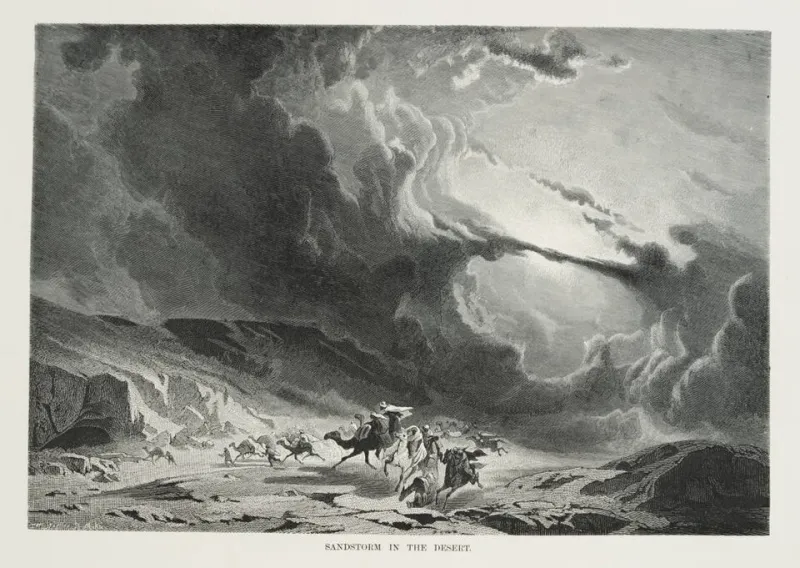
Photo: Luffler, August, CC BY-SA 2.5, via Wikimedia Commons
Every fictional world has a villain you can name. But the best ones have a villain you can't negotiate with.
Think about it: the sandworms of Arrakis get the merch, the movies, the fan art. But the sandworms would be nothing without the desert itself — a planet so hostile that an entire civilization's religion, economy, and physiology grew around surviving it. The climate isn't the backdrop of Dune. It's the author.
Weather That Writes the Rules
Here's the trick worldbuilders keep rediscovering: when you make the environment genuinely punishing, every cultural detail stops feeling decorative and starts feeling inevitable.
Westeros' years-long winters aren't just spooky ambiance for the Wall. They explain why northern houses hoard grain, why marriage alliances matter so much, why 'winter is coming' functions as both a prayer and a threat. Remove the extended seasons and half the political logic of the Seven Kingdoms collapses. George R.R. Martin has said he wanted seasons to feel wrong, almost mythic — and that wrongness seeps into everything from food stores to funeral customs.
Frank Herbert went further. On Arrakis, water is money, morality, and memory all at once. The Fremen's stillsuits, their dead-drop water wills, their disgust at anyone who wastes moisture — none of that needs a paragraph of exposition because the desert already explained it.
The Hubris Tax
There's a second, meaner use of fictional weather: punishment.
Sci-fi loves a colony that thought it could out-engineer a planet. The storms of Jupiter's moons, the acid rain of a terraformed Venus, the endless hurricane belts of an ocean world — these exist to humble the characters, and by extension, us. The message is usually the same: nature here has been running the place a lot longer than you have.
Even N.K. Jemisin's broken, seasonally unstable world in The Fifth Season works this way. The 'Seasons' are apocalyptic climate events so routine that society has developed entire castes, protocols, and folk religions around them. The weather created the bureaucracy. The weather created the prejudice against orogenes. The weather is the reason the story exists at all.
What Your Climate Says About Your People
If you're building a world, try this diagnostic: pick your harshest weather pattern, then ask three questions.
First — what does it make your people value? Scarcity of water creates reverence. Scarcity of warmth creates hospitality codes (the guest who arrives freezing must be fed, or the gods will notice).
Second — what does it make them fear? A culture shaped by hurricane season builds differently, prays differently, and buries its dead differently than one shaped by drought.
Third — what does it make them deny? This is the modern one. Some of the most compelling recent worldbuilding involves societies that refuse to admit their climate has changed, even as the evidence buries their cities. That's not just worldbuilding anymore. That's a mirror.
The Slowest Character Arc in Fiction
Climate is the only character who never monologues, never betrays anyone out of spite, and never dies in act three. It just waits. And in the hands of a good worldbuilder, that patience is terrifying — because you know that eventually, the weather always gets the last word.