Why the Best Fictional Worlds Know When to Say No

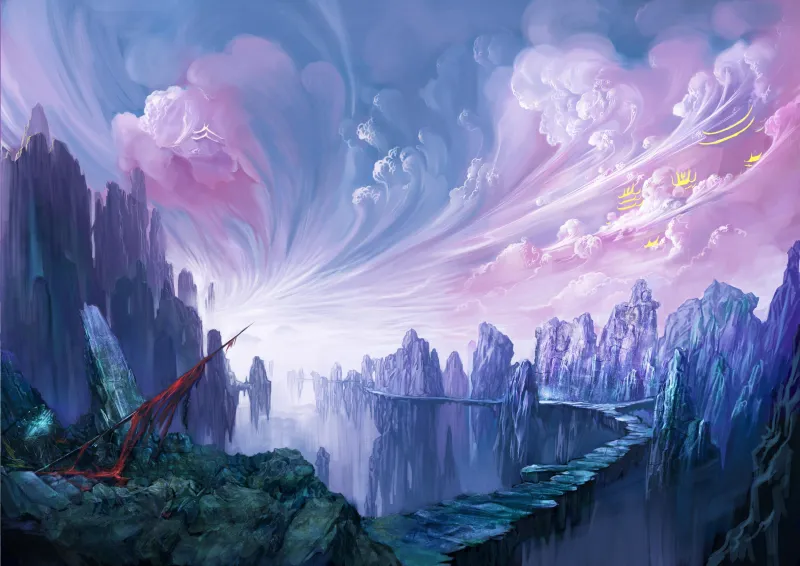
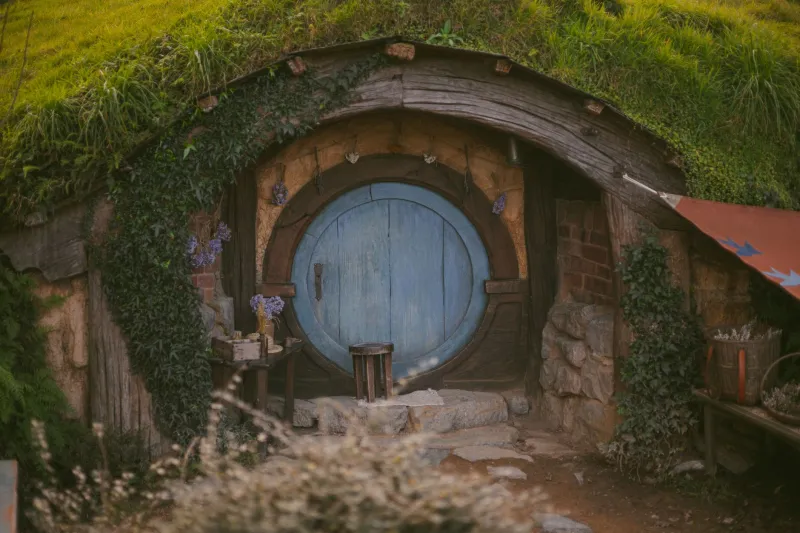
Photo: John Lucas , CC BY-SA 2.0, via Wikimedia Commons
Here's a thought experiment: imagine a magic system with no rules. You can do anything, heal anyone, rewrite reality on a whim. Sounds incredible, right? Now try to write a story set inside it. Try to build tension. Try to make a single moment feel like it matters.
Yeah. You can't.
The fictional universes that genuinely burrow into your brain and set up permanent residence aren't the ones offering unlimited possibility. They're the ones that slam doors in your face and then hand you a map of every door that's left. Constraints aren't a compromise in great worldbuilding. They're the whole engine.
The Paradox of Infinite Power
When a fictional world lets its characters do basically anything, the audience stops caring. It's a counterintuitive truth that worldbuilders have been wrestling with for decades. Brandon Sanderson basically built a career codifying it — his now-famous Laws of Magic argue that a magic system's ability to solve problems should be directly proportional to how well the reader understands its limitations. The moment your protagonist can wave their hand and fix everything, the narrative collapses into mush.
Look at what Avatar: The Last Airbender does with bending. Every element has hard physical logic. Earthbenders need contact with the ground. Firebenders generate their own flame but can't sustain it forever. Waterbenders are weaker away from large bodies of water. These aren't just flavor details — they're load-bearing walls. Every single fight scene, every tactical problem, every character's sense of self is built on top of those restrictions. Toph's blindness becomes a superpower specifically because of how earthbending works. Without the constraints, that entire arc evaporates.
Geography That Pushes Back
It's not just magic systems. The best fictional worlds use physical geography as a kind of stubborn, silent antagonist.
Tolkien's Middle-earth is a masterclass in this. The Misty Mountains don't just exist for atmosphere — they're a genuine barrier that redirects the entire plot of The Fellowship of the Ring. Caradhras refuses to let the Fellowship pass. The mountain doesn't care about the fate of the world. It just... blocks the way. That refusal forces the heroes underground, into Moria, into one of the most consequential sequences in fantasy literature. A world that simply lets characters go wherever they need to go would have robbed us of all of it.
Dune does something similar with Arrakis. The desert isn't just a setting — it's a constraint system with teeth. Water is so scarce that the Fremen have built their entire culture, body chemistry, and spiritual practice around conserving it. The geography doesn't bend to human need. Humans bend to it, and that bending is the whole civilization.
Technology That Breaks Down
Sci-fi has its own version of this problem, and the genre's best entries handle it by making technology unreliable in believable ways.
The ships in Battlestar Galactica are old. They break. They run out of fuel. They require constant, unglamorous maintenance from people who are exhausted and scared. That fragility is what makes every jump through space feel like a genuine gamble rather than a plot convenience. Compare that to fictional universes where technology is essentially magic with a chrome finish — where the ship always works until the plot needs it not to — and you can feel the difference in your bones.
The Expanse is maybe the gold standard here. Its spacecraft obey actual physics. Acceleration takes time. Distances are brutal. The human body, under high-g burns, is a liability. Characters don't zip across the solar system in an afternoon. They suffer through it, and that suffering is what makes the universe feel like a place rather than a backdrop.
Emotional Investment Lives Inside the Fence
Here's what all of this is really about: emotional investment needs something to press against.
When we watch a character fight within a constraint system, we're not just watching plot mechanics. We're watching someone navigate a world that has opinions about what's possible. That world's opinions create stakes. Stakes create tension. Tension is what makes you stay up until 2 a.m. reading one more chapter.
The constraints also do something subtler. They make the world feel like it existed before the story started and will keep existing after it ends. A world with hard limits has a kind of geological stubbornness to it — it doesn't reshape itself around narrative convenience. It was here first, and it'll be here last, and the characters are just passing through on its terms.
That's the feeling every worldbuilder is chasing. Not infinite possibility. A world that knows when to say no — and means it.
Building Your Own Walls
If you're in the worldbuilding trenches yourself, the takeaway here is almost aggressively practical: your limits are your best friends. Every time you establish something your world cannot do, you're actually expanding what it can mean.
Ask yourself what the geography refuses to allow. Ask what your magic system costs, and who pays, and what happens when they can't. Ask where your technology fails, and who suffers most when it does. The answers to those questions aren't restrictions on your creative freedom. They're the architecture your story lives inside.
The most immersive fictional universes ever built didn't succeed by offering readers everything. They succeeded by offering something specific, something bounded, something that pushed back. In the end, a world that can say no is a world worth believing in.