A Cup of Something Stranger: How Fictional Worlds Hide Entire Civilizations in Ordinary Objects
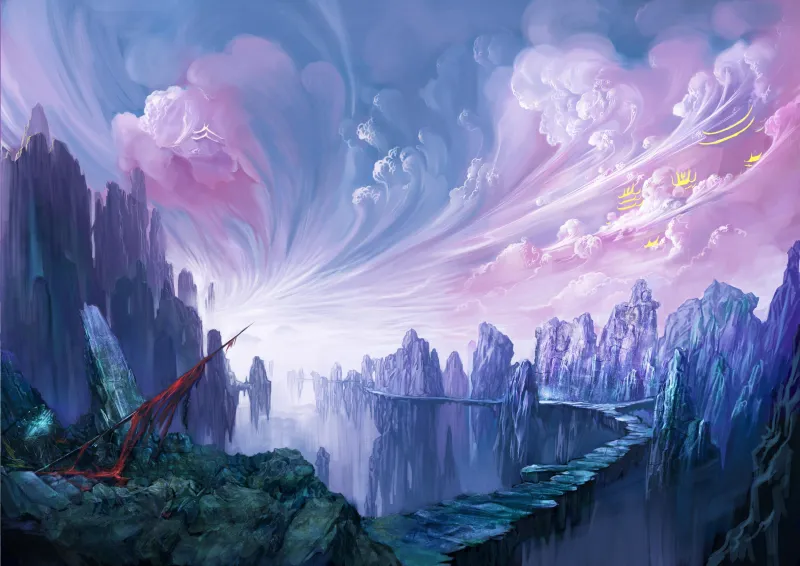
Photo: fantasy market stall with exotic food and artifacts close up, via wallpapercave.com
Forget the prophecy. Forget the ancient evil stirring in the north. The moment that made you truly believe in a fictional world? It was probably something small. A meal eaten in silence with specific ritual around it. A coat worn inside-out to signal mourning. A coin that nobody actually spends because its real value is symbolic.
The great worldbuilders figured out a long time ago that civilizations don't reveal themselves through their monuments. They reveal themselves through their habits. The mundane stuff — the things characters do every single day without thinking — is where the real cultural DNA lives. And when a writer gets that right, something clicks in the reader's brain that no amount of lore-dumping can replicate.
The Weight of Small Things
There's a reason the food in A Song of Ice and Fire is so aggressively specific. George R.R. Martin doesn't just tell you characters are eating — he tells you what, how it's prepared, who serves it, and what the presence or absence of particular dishes signals about power and hospitality. A guest who isn't offered bread and salt is in danger. A feast that's too lavish is a performance of dominance. A prison meal that's surprisingly decent is a clue.
None of that requires a history lesson. It just requires the reader to pay attention to food the way people in that world pay attention to food. The cultural logic seeps in sideways, through texture and detail, and by the time you consciously register that you've learned something, it's already part of how you understand Westeros.
This is the 'small details' approach to worldbuilding at its most effective — using the ordinary as a delivery system for the extraordinary.
Clothing as a Language Nobody Translates for You
Fashion is one of the most underrated worldbuilding tools in the genre, and the writers who use it well tend to trust their readers to do the interpretive work.
In Ursula K. Le Guin's The Left Hand of Darkness, clothing choices on Gethen are bound up with gender, politics, and season in ways that are never fully explained but accumulate meaning across the novel. The way people dress tells you who they're aligned with, what they're signaling, and how they want to be read — which is exactly how clothing functions in real human societies, just transposed into an alien context.
Dune does something similar with the stillsuit. It's protective gear, yes, but it's also a cultural statement. A Fremen's relationship to their stillsuit is intimate and serious — it's not a tool they grab off a shelf, it's something they maintain with care, something that marks them as adapted to a world that kills the unprepared. When Paul Atreides learns to wear one properly, it's not a costume change. It's an initiation.
The clothing isn't explained. It's worn. And that difference is everything.
Currency That Does More Than Buy Things
Money is another place where worldbuilders can either go through the motions or do something genuinely interesting. The lazy version is a fantasy world with gold coins that work exactly like dollars, just with dragons on them. The interesting version is a currency system that encodes the values and history of an entire civilization.
In Mistborn, the economic system of the Final Empire reflects its social stratification so completely that the physical coins become a kind of political document. Who mints them, who can use them, what they're made of — all of it maps onto the power structure in ways that feel organic rather than designed.
Terry Pratchett, who was quietly one of the best worldbuilders who ever lived, loved to use currency as comedy that was also sociology. The way money moves through Ankh-Morpork tells you more about that city's class anxieties, mercantile culture, and barely-functional civic institutions than any formal description could.
Tools and What They Say About Work
How a fictional civilization relates to labor — who does it, how it's valued, what tools are used and who owns them — is embedded in the objects that populate the world.
The Star Wars universe is fascinating here because of the droids. R2-D2 and C-3PO are beloved characters, but they're also property. They get their memories wiped. They're bought and sold. The casual, unremarked nature of droid ownership in that universe says something uncomfortable about how that civilization thinks about consciousness and labor — something the films mostly leave you to sit with rather than address directly. The tools walk around and have feelings, and nobody in power particularly cares. That's a whole political philosophy expressed through the presence of two robots in every scene.
The Technique Behind the Magic
What ties all of this together is restraint. The writers who use everyday objects to communicate cultural meaning aren't writing encyclopedia entries about those objects. They're showing characters interact with them in ways that assume the cultural context is already understood.
That assumption is the move. When a character in a fictional world handles an ordinary object with a specific kind of care or casualness, the reader picks up on it. They start to understand the invisible rules. They start to feel like they live there too.
The best fictional universes aren't built from the top down, starting with grand cosmologies and working toward the details. They're built from the ground up, starting with the cup of tea, the worn-out coat, the coin nobody spends. Get those right, and the rest of the world stands up on its own.