Worlds That Let You Breathe: The Rise of Cozy Universes in Fantasy and Sci-Fi
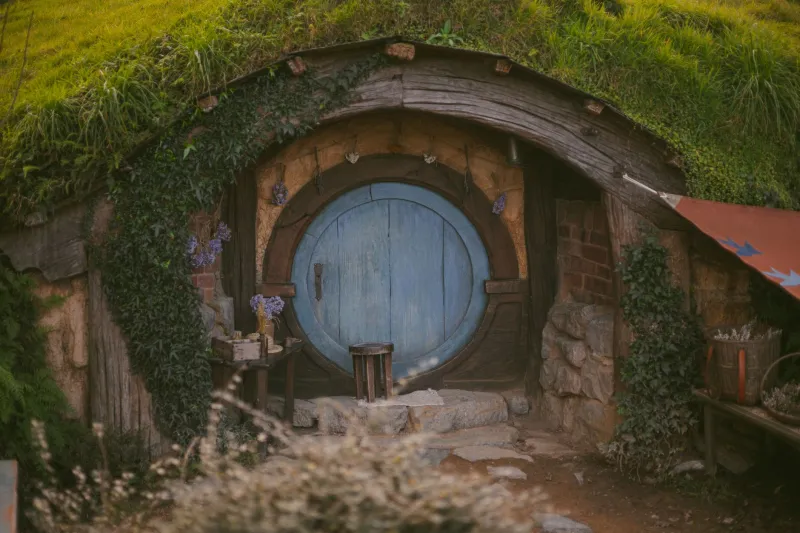
There's a particular kind of exhaustion that sets in after the tenth apocalypse. Not the fictional kind—the real one. The scroll-through-the-news-and-immediately-regret-it kind. And somewhere in that fog, a lot of genre fans started making a quiet, deliberate choice: they stopped reaching for the next high-stakes epic and started building something smaller. Warmer. Something that felt, against all odds, like rest.
Welcome to the age of cozy worldbuilding.
What Even Is a Cozy Universe?
Cozy fictional worlds aren't just stories where nothing bad happens. That would be boring in a different way. What separates them is their relationship with urgency. In a cozy universe, time moves at a pace that rewards observation. A healer cataloging herbs in a sun-warmed cottage. A space station botanist who tends her garden between diplomatic missions nobody asked her to join. A village of magical craftspeople whose biggest annual conflict is who gets the best stall at the autumn market.
The genre labels shift depending on who you ask—cottagecore fantasy, solarpunk sci-fi, hopepunk, pastoral speculative fiction—but the underlying philosophy is consistent: these are worlds designed to be inhabited rather than survived. Conflict exists, but it's scaled to something a person can actually hold in their hands. Stakes that feel human rather than cosmic.
Think of something like the game Stardew Valley or the anime Aria, set on a terraformed Venice on Mars where gondoliers navigate canals in near-silence. Nobody is saving the world in Aria. The entire emotional weight of the series rests on learning to notice beauty before it passes. That's the move. That's the whole move.
Why Now?
It's tempting to frame cozy worldbuilding as a reaction to franchise fatigue—too many cinematic universes, too many multiverse-ending threats, too much noise. And that's partly true. But the timing of this trend's acceleration lines up with something more specific: the sustained, grinding anxiety of living through the 2020s in America.
When real life feels like a permanent crisis mode, the fantasy of not being in crisis mode becomes genuinely radical. There's research in psychology suggesting that high-arousal entertainment can actually compound stress rather than relieve it—that what depleted brains often need isn't more stimulation but less. Cozy worldbuilding, consciously or not, seems to have internalized this. It offers the escapism of genre fiction without the cortisol spike.
Solarpunk deserves a special mention here because it does something even more interesting than just lowering the stakes. It imagines futures where humanity has already solved the big problems—climate, inequality, resource scarcity—and the story is about what people do with that peace. It's utopian, yes, but it's a working utopia, not a naive one. Communities still have tension. People still make mistakes. But the world isn't structured to punish you for existing in it. That distinction matters enormously.
The Worldbuilding Craft of Slowness
Here's what doesn't get discussed enough: building a cozy world is genuinely hard. Maybe harder than building a world at war.
High-conflict universes have a built-in structural advantage. Threat creates momentum. Momentum creates plot. A writer who drops their characters into danger has a thousand ready-made tools for keeping the reader turning pages. But a writer building a world where the point is the quality of an afternoon? They have to make the world itself interesting enough to justify existing in it without a ticking clock.
That means the ecology has to feel real. The social textures have to reward attention. The magic or technology has to be integrated into daily life in ways that feel genuinely thought through rather than decorative. A cozy universe exposes every worldbuilding shortcut because there's nothing else to hide behind. You can't paper over thin lore with an action sequence.
This is, incidentally, exactly the Slotharian perspective applied to craft: slowness as discipline, not laziness. The worlds that feel most restful to inhabit are usually the ones whose creators spent the most time on the details nobody strictly needed to include.
The Community Dimension
One of the more fascinating developments in this space is how cozy worldbuilding has become a communal practice. Across platforms like Tumblr, Reddit, and TikTok, fans aren't just consuming these kinds of worlds—they're co-creating them. Collaborative worldbuilding projects, shared fantasy settings built around farming or herbalism or small-town magic, communities where the explicit goal is to build somewhere that feels safe.
That word—safe—keeps coming up. And it's worth sitting with rather than dismissing. These aren't fans who've lost their appetite for complexity. Many of the same people building cottagecore fantasy villages are also deeply engaged with morally thorny, high-stakes fiction. What they're seeking in cozy spaces is something more specific: a fictional world that doesn't treat its inhabitants as raw material for suffering.
That's a design philosophy with real implications for how we think about worldbuilding at large. The best cozy universes suggest that a world can be detailed, interesting, and emotionally resonant without organizing itself around trauma. That's not a small idea.
Lingering as a Revolutionary Act
There's a version of the conversation about cozy worldbuilding that frames it as escapism in a slightly apologetic way—as if needing rest is something that requires justification. That framing misses what's actually happening.
Building fictional worlds where you're allowed to slow down, where observation is rewarded over aggression, where the passage of seasons matters more than the body count—that's a values statement. It's a genre community collectively deciding that the imagination deserves to be used for more than rehearsing catastrophe.
The worlds we choose to build and inhabit reveal what we actually believe about what life could be. And right now, a lot of people are building worlds where the light comes in through the window at a good angle, the tea is always hot, and the biggest problem on any given Tuesday is figuring out which mushrooms are safe to add to the soup.
Honestly? That sounds like a universe worth exploring.