Still Waters, Deep Roots: The Characters Who Watch Everything and Change Everything
Here at The Slotharian Chronicles, we have something of a professional appreciation for characters who don't rush. It's in the name, really. But beyond the obvious brand affinity, there's a genuine storytelling argument to be made for the character who hangs back, watches the room, and waits for exactly the right moment—which sometimes never comes, because they already moved three steps ago when nobody was looking.
These aren't passive characters. Passivity is something else entirely. What we're talking about is a specific kind of strategic stillness: characters who understand that the most powerful position in any system is often the one that looks least powerful from the outside. The peripheral figures. The patient ones. The watchers.
The Anatomy of a Watcher
First, let's be precise about what this character type actually is, because it's easy to confuse with other archetypes.
The watcher isn't the mysterious mentor who dispenses wisdom and then disappears. That character's stillness is a narrative device—they exist to serve the protagonist's journey. The watcher we're talking about has their own journey, it's just running on a completely different clock than everyone else's.
They're not the schemer either, though there's overlap. The classic schemer—your Littlefingers, your Frank Underwoods—is usually defined by ambition that drives action, even if that action is carefully concealed. The watcher is defined more by comprehension. They're not necessarily trying to get somewhere specific. They're trying to understand how the whole system works, and that understanding eventually becomes leverage they didn't even plan to use.
Think of a character like Samwell Tarly in the early seasons of Game of Thrones—before the show made choices about him that are perhaps better left unexamined. Sam isn't a schemer. He's not particularly brave in the conventional sense. But he reads, he remembers, and he notices things that characters with more obvious power completely miss. The knowledge he accumulates through patient observation becomes, at key moments, more consequential than any sword swing.
Or consider Neville Longbottom in Harry Potter, though his arc is more overt. For most of the series, he exists in the periphery—fumbling, overlooked, perpetually underestimated. But he's watching the whole time. He's learning. When the moment arrives, he's ready in a way that nobody who'd been tracking the obvious heroes could have predicted.
Why Fictional Universes Need These Characters
From a pure worldbuilding perspective, watcher characters serve a function that goes beyond their individual story arcs.
The protagonists of most fantasy and sci-fi narratives move too fast to actually show us the world. They're being chased, or chasing someone, or in the middle of a revelation, or preparing for the next catastrophe. They experience the world in motion. But the watcher experiences it at rest, and that means they're positioned to notice the things that are only visible when you stop moving.
A watcher character can reveal the texture of a fictional universe in ways that pure action never can. The political undercurrents of a royal court. The way a magic system actually operates in the hands of ordinary people rather than exceptional ones. The small social rituals that tell you more about a civilization's values than any lore dump ever could. These characters function, in a sense, as the worldbuilder's instrument—the lens through which the audience gets to slow down and actually see where they are.
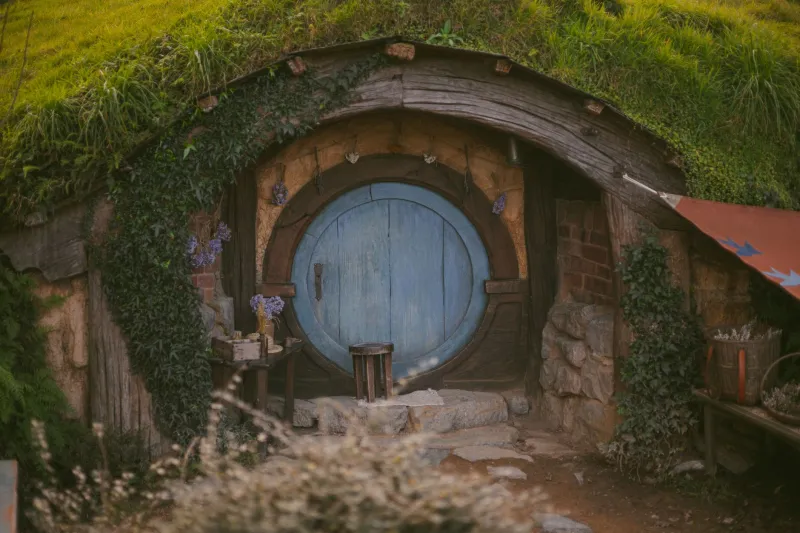
This is why the best fictional universes tend to have at least one of them. Tolkien's hobbits are partly this—creatures whose entire cultural identity is organized around appreciating the present moment, who notice the quality of pipe-weed and the exact shade of afternoon light in a way that Gandalf, always rushing between crises, never could. Bilbo's careful observation of Smaug's weak spot is a watcher's victory. He was paying attention when everyone else was busy being heroic.
The Slotharian Advantage
There's a reason this site named itself after an animal that has perfected the art of strategic non-urgency. The sloth, it turns out, is not failing at being a faster animal. It's succeeding at being exactly what it is—a creature whose survival strategy is built on efficiency, stillness, and a profound indifference to the frantic pace of everything around it.
The watcher characters in fiction operate on a similar logic. Their apparent inaction isn't a deficit. It's a method. While the protagonist is burning through resources—physical, emotional, social—the watcher is accumulating them. While the hero is making enemies through bold action, the watcher is building quiet relationships with people nobody else thought to notice. The gardener. The scribe. The servant who's been in that household for forty years and remembers everything.
In sci-fi, this archetype often shows up in the form of the long-lived alien observer—a being whose patience is so fundamental to their nature that they've watched human civilizations rise and fall the way we watch seasons change. The Observers in Fringe, the Elders in various space opera traditions, the ancient AI who's been running in the background since before the war. Their power isn't in what they do. It's in what they know, and how long they've been knowing it.
When Patience Becomes the Plot
The most interesting version of this archetype is when the narrative structure itself starts to mirror the watcher's perspective. Stories told from the periphery, where the main action is glimpsed rather than centered, where the reader has to do the same patient work of observation that the character is doing.
Austin Walker's actual-play Friends at the Table does this beautifully in places—building worlds where the most consequential forces are the ones operating on the longest timescales, and where understanding requires the audience to pay attention across episodes, not just to the immediate drama.
In prose, writers like N.K. Jemisin and Ursula K. Le Guin have built entire narrative architectures around this idea—that the patient observer, the one who refuses to accept the framing that everyone else is working from, is often the one who can actually change things. Not by force. By understanding.
The Gift of Not Rushing
What these characters ultimately offer—to the fictional universes they inhabit and to the readers experiencing them—is permission. Permission to slow down. Permission to value comprehension over action, depth over speed, the long game over the immediate win.
In a genre landscape that often rewards the loudest, fastest, most powerful figures, the watcher is a quiet argument for a different kind of excellence. One that doesn't announce itself. One that doesn't need to.
The world changes around them, and nobody quite notices when it happened. That's not a weakness. That's the whole point.