Patience Is Power: Why the Mightiest Forces in Sci-Fi and Fantasy Refuse to Rush
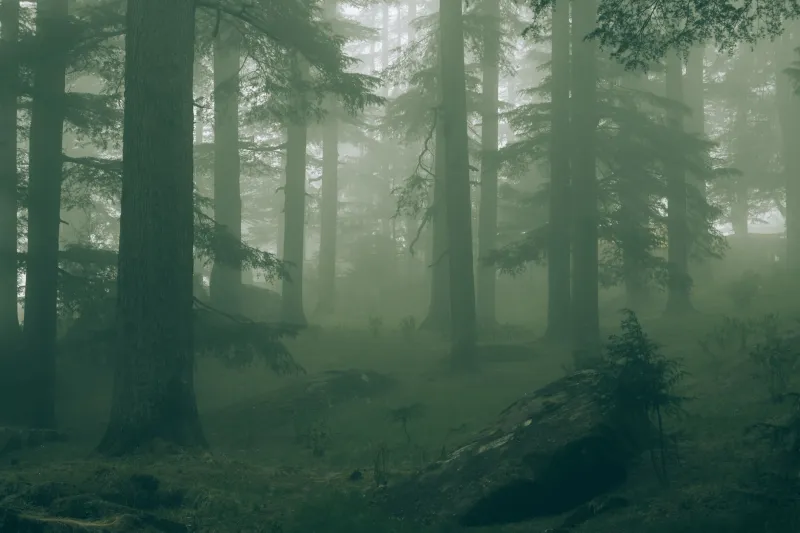
We live in a culture that practically worships speed. Same-day delivery. Infinite scroll. Binge-watching entire seasons in a single weekend. So it's a little ironic — and honestly kind of refreshing — that some of the most richly imagined fictional universes out there are built around a completely different philosophy. One where slowness isn't a flaw to be fixed. It's a feature. A strength. Maybe even a superpower.
Here at The Slotharian Chronicles, we've always had a soft spot for the unhurried. And when you start looking for it, you realize that the greatest worldbuilders in sci-fi and fantasy history have been quietly making the same argument for decades: the beings and civilizations willing to operate on a longer timeline are often the ones who end up shaping everything else.
The Ents Weren't Boring — They Were Ancient
Let's start with the obvious example, because it's obvious for a reason. Tolkien's Ents, those massive tree-herders wandering the forests of Fangorn in The Lord of the Rings, are famously slow. They take forever to say anything. Their meetings — the Entmoots — stretch on for what feels like geological ages. Pippin and Merry can barely contain their impatience.
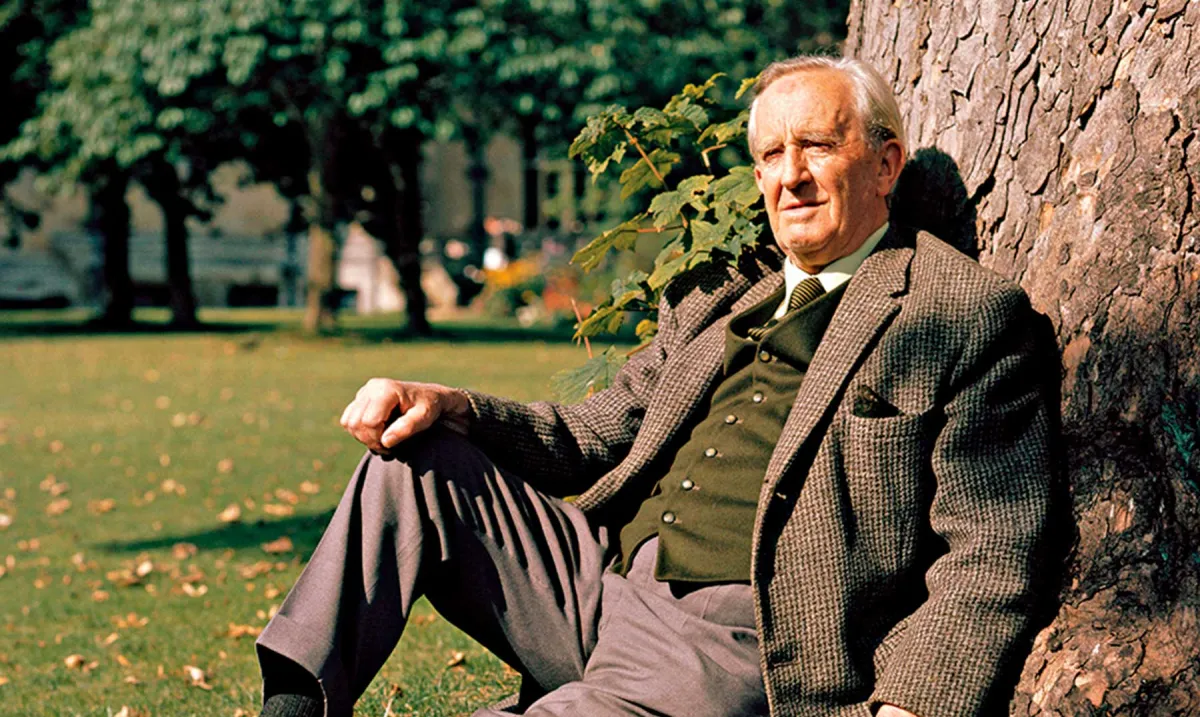 Photo: Tolkien, via frasesdelavida.com
But here's the thing Tolkien was doing on purpose: the Ents aren't slow because they're dim. They're slow because they're old. They carry the memory of a world that existed before most of Middle-earth's current inhabitants were even a glimmer in the cosmos. When Treebeard finally decides to act — when the Ents march on Isengard — it's one of the most devastating moments in the entire story. All that patience, all that accumulated weight, released in a single unstoppable tide.
Tolkien understood something that a lot of modern storytelling forgets: the longer something waits, the more consequential its arrival becomes. Slowness builds gravity.
Le Guin and the Civilizations That Think in Centuries
If Tolkien made slowness feel mythic, Ursula K. Le Guin made it feel cosmic. Her Hainish Cycle — the sprawling, loosely connected universe that includes The Left Hand of Darkness and The Dispossessed — is full of civilizations that communicate across interstellar distances using a device called the ansible, but still travel between worlds at sub-light speeds. Journeys take years. Cultural shifts take generations. The Ekumen, the loose confederation of human worlds at the heart of the cycle, doesn't conquer or colonize. It waits. It sends single envoys to entire planets and asks them to simply… listen.
 Photo: Ursula K. Le Guin, via media.gq.com
Le Guin's telepaths, particularly in stories like The Telling, don't broadcast loud. They receive quietly. There's a meditative quality to how her characters process information and make decisions that feels almost countercultural in the best way. She was writing these books during some of the most turbulent decades in American history — the '60s, '70s, and beyond — and her fictional universes kept insisting that wisdom accumulates slowly, and that the rush to act is often the thing that causes the most damage.
Her worlds feel alive not because they're fast, but because they're deep.
Slow Worldbuilding as a Trust Exercise with the Reader
There's a craft argument here too, not just a philosophical one. When a worldbuilder commits to slowness — when they resist the urge to explain everything upfront, to resolve every tension quickly, to give readers immediate payoff — they're essentially making a bet that the audience will stay curious long enough to be rewarded.
Think about the way Brandon Sanderson reveals his magic systems, parceling out rules and consequences across hundreds of pages. Or the way N.K. Jemisin builds the geology and sociology of the Stillness in The Broken Earth trilogy so methodically that by the time the full picture snaps into focus, it hits like a seismic event. These authors aren't being withholding for the sake of it. They're training readers to pay attention differently — to slow down and notice the texture of the world rather than just sprinting toward the plot.
The fictional universes that tend to stick with us longest are the ones that felt like they existed before the story started and would continue after it ended. That sense of ongoing, unhurried existence is something you can't fake with exposition dumps. It has to be earned through pacing.
The Slotharian Principle (Yes, We're Going There)
Okay, we'd be remiss not to acknowledge the name of this very website. The sloth, that magnificently unbothered creature, has become a kind of cultural mascot for intentional slowness. And while we're obviously here to celebrate fictional universes rather than actual wildlife biology, there's something genuinely instructive in the sloth's approach to existence. It doesn't move slowly because it lacks ambition. It moves slowly because that pace is perfectly calibrated to its environment and needs. It's efficient in a way that looks inefficient from the outside.
The best slow-moving forces in sci-fi and fantasy operate on the same principle. The Ents aren't wasting time during those long Entmoots — they're achieving consensus in a way that makes their eventual action unified and irresistible. Le Guin's Ekumen isn't failing to spread its influence — it's spreading it in a way that doesn't create resentment and blowback. The slowness is load-bearing.
Why This Matters for Genre Fans Right Now
Here's the part where we get a little real. We're consuming genre content faster than ever. Streaming services drop entire seasons at once. Social media has us summarizing 400-page novels into three-sentence takes before we've even finished the prologue. There's genuine pressure — both on creators and audiences — to keep things moving, to get to the good stuff, to not waste anyone's time.
And yet the genre works that are generating the most passionate, long-lasting fan communities tend to be the slow ones. The ones with deep lore. The ones where the worldbuilding rewards rereading. The ones where the most powerful forces in the universe operate on a timescale that dwarfs any individual plotline.
Maybe that's not a coincidence. Maybe when we sink into a fictional universe that refuses to rush, we're getting something we're genuinely starved for — the experience of time moving differently. Of consequence accumulating. Of patience being treated not as a character flaw to overcome, but as a kind of mastery.
The universe's most powerful beings, it turns out, might just be the ones who learned how to wait.
And honestly? We respect that deeply.